
Blog
Apple in ASL: How to Sign “Apple” in American Sign Language

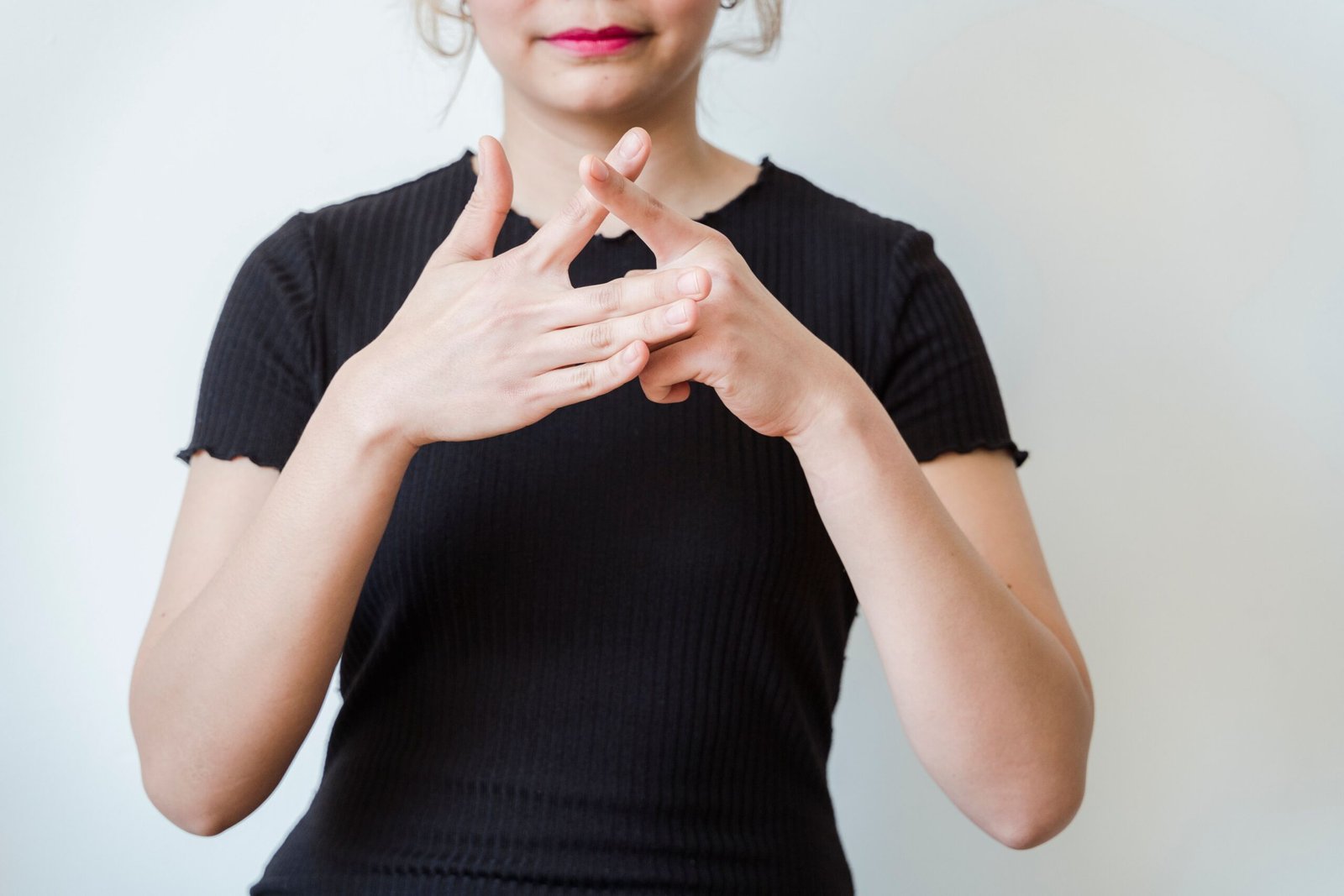
Learning individual vocabulary signs is one of the easiest ways for beginners to start building confidence in American Sign Language (ASL), and apple in ASL is a useful example because it introduces learners to the relationship between handshape, movement, and meaning. Whether you are learning ASL for personal interest, communicating with Deaf or hard-of-hearing people, studying sign language vocabulary, or teaching basic signs to children, understanding how common words are represented visually can make the learning process more engaging. The sign for apple is frequently included in beginner ASL vocabulary because it is a familiar everyday word and can be practiced alongside other food-related signs. However, simply memorizing a hand movement is not enough to become comfortable with ASL. Learners should also pay attention to hand orientation, location, movement, facial expression, and the broader context in which a sign is used.
When searching for apple in ASL, many beginners are looking for a quick answer, but a good explanation should provide more than a one-line definition. It should explain the general movement involved, clarify what learners should pay attention to, and place the sign within the larger structure of American Sign Language. ASL is a complete natural language rather than a system of English words represented with the hands, so learning vocabulary works best when individual signs are eventually combined with ASL grammar and conversational practice. This guide explores the apple ASL sign, explains how beginners can practice it, discusses common mistakes, and answers frequently asked questions about signing “apple” in American Sign Language.
What Is Apple in ASL?
The apple in ASL sign is a commonly taught vocabulary sign associated with the concept of an apple or the fruit itself. In many ASL learning resources, the sign is demonstrated using a particular handshape and a twisting or rotating movement near the cheek area. Beginners may initially find this movement unusual because it does not visually resemble an apple in an obvious way. That is completely normal. Signs in ASL do not always look like the objects or actions they represent, and their meanings are learned through repeated exposure and use. Rather than trying to create a literal picture of an apple with your hands, learners should focus on remembering the established ASL handshape, location, and movement.
An important point for anyone studying apple in American Sign Language is that the sign should be learned as part of ASL vocabulary rather than as an isolated gesture. When you practice the sign, concentrate on reproducing the movement consistently and comfortably instead of exaggerating it. Watching a qualified ASL instructor or Deaf signer can be especially useful because small differences in hand position or movement can be easier to understand visually than through written instructions. Once you become familiar with the sign for apple, you can begin combining it with other basic food and everyday vocabulary to create more meaningful ASL practice.
How to Sign Apple in ASL
To learn the apple ASL sign, begin by becoming familiar with the handshape used in the standard sign. The commonly taught version involves forming the appropriate handshape and positioning it beside the cheek, followed by a twisting motion. The movement is relatively compact, so beginners should avoid making the gesture excessively large or turning it into a broad circular motion. The goal is to reproduce the established sign naturally and consistently. Because ASL is visual and three-dimensional, written descriptions can only provide a general guide; watching an accurate demonstration is the best way to understand exactly how the handshape and movement work together.
When practicing how to sign apple, start slowly and separate the individual elements of the sign. First focus on the handshape, then practice placing the hand in the correct location, and finally add the movement. After you can perform each component comfortably, combine them into one smooth sign. Repeating the sign slowly several times can help build muscle memory, after which you can gradually increase your natural signing speed. Avoid worrying about speed at the beginning. Accuracy, comfortable movement, and consistency are more valuable for a new learner than trying to imitate the speed of an experienced signer immediately.
Understanding the Apple ASL Handshape
Handshape is one of the most important components of ASL because changing the configuration of the hand can change the meaning of a sign. When learning apple in ASL, beginners should therefore pay close attention to the fingers and thumb rather than concentrating only on the movement. It is common for new signers to remember the general idea of a gesture while allowing the handshape to become inconsistent. This can make the sign less recognizable or potentially turn it into a different sign. Practicing in front of a mirror can help because you can observe whether your fingers remain in the intended position throughout the movement.
Another useful technique is to practice the apple sign several times without immediately trying to connect it to a sentence. This gives you an opportunity to develop control over your handshape and movement. Once the basic sign feels comfortable, practice it in different contexts, such as naming foods, discussing a meal, or talking about fruit. Contextual practice helps move vocabulary from simple memorization toward usable communication. Over time, you will begin recognizing the sign more quickly when watching other people sign as well.
Why Learning Apple in ASL Is Useful for Beginners
Learning apple in ASL can be useful because familiar everyday vocabulary gives beginners an accessible way to develop their signing skills. Food vocabulary is especially practical because it can be used in many ordinary conversations involving meals, shopping, restaurants, cooking, nutrition, and personal preferences. A beginner who learns apple can gradually add related vocabulary such as fruit, banana, orange, bread, milk, water, and other commonly used words. Instead of memorizing disconnected signs, learners can build small vocabulary groups that make practice more meaningful and easier to remember.
The apple ASL sign is also a good reminder that learning ASL involves more than translating individual English words. A person who knows dozens of isolated signs may still struggle to hold a natural conversation if they have not learned ASL grammar, facial expressions, sentence structure, and conversational conventions. For that reason, vocabulary practice should be combined with exposure to authentic ASL whenever possible. Learning from Deaf educators, qualified ASL instructors, and reliable educational resources can help beginners develop a more accurate understanding of the language and its cultural context.
Common Mistakes When Signing Apple
One common mistake when learning apple in ASL is concentrating so much on remembering the meaning that the actual handshape becomes secondary. Beginners sometimes make a gesture that feels approximately correct but does not reproduce the standard form accurately. Another frequent problem is exaggerating the movement. Since beginners often want to make sure the sign is visible, they may use a movement that is much larger than necessary. Practicing slowly in front of a mirror can help correct both issues because it allows learners to see exactly what their hands are doing.
Another mistake is relying entirely on written descriptions of how to sign apple. Written instructions can be useful for reinforcement, but ASL is fundamentally visual, and the precise details of a sign are often much easier to learn by watching it performed. Learners should also avoid assuming that every person signs identically. Natural languages have regional variation, individual signing styles, and contextual differences. If you encounter a variation, it is useful to check a reputable ASL resource or ask a qualified signer rather than automatically assuming that one version is the only possible form.
How to Practice the Apple Sign
A simple practice routine can make apple in ASL much easier to remember. Start by practicing the handshape several times without the movement, making sure your fingers are positioned consistently. Next, add the movement slowly and repeat the complete sign several times. Then look away from your hands and try to produce the sign from memory. If possible, record yourself practicing so you can compare your movement with a trusted instructional demonstration. This type of repetition helps develop both visual recognition and motor memory, two skills that are important for becoming comfortable with ASL.
You can also place apple in ASL into simple vocabulary exercises. For example, practice identifying the sign when you see it performed, then practice producing it when someone says the English word “apple.” After that, expand your practice by learning several related food signs and reviewing them together. The goal is not simply to repeat one movement hundreds of times but to encounter the sign in different situations. Regular short practice sessions are often more manageable and productive than attempting to memorize a large amount of vocabulary in a single sitting.
Apple in ASL and ASL Vocabulary Building
Once you know the sign for apple in ASL, you can use it as a starting point for expanding your vocabulary. Beginners can create themed groups around fruit, food, drinks, family, school, work, hobbies, and everyday activities. Grouping vocabulary by topic makes it easier to remember because the signs become connected to a particular subject rather than existing as unrelated pieces of information. For example, learning apple alongside other fruit vocabulary creates an opportunity to practice recognizing similarities and differences between multiple signs.
Building vocabulary in this way can also make learning American Sign Language more enjoyable. Instead of treating ASL like a list of words to memorize, you can gradually create situations in which the vocabulary becomes useful. You might practice discussing what foods you like, what you ate during the day, or what you want to buy at a grocery store. As your vocabulary grows, you can move from individual signs toward complete phrases and conversations. This progression is much more useful than focusing exclusively on memorizing isolated signs.
Is Apple in ASL the Same as the English Word “Apple”?
The concept represented by apple in ASL corresponds to the English word “apple,” but ASL and English are different languages. This distinction is important because beginners sometimes assume that ASL is simply English translated word by word into hand movements. In reality, ASL has its own grammar, syntax, expressions, and linguistic structure. A person can know the ASL sign for apple without necessarily knowing how to construct a grammatically natural ASL sentence involving that concept.
Understanding this difference will make your study of the apple ASL sign much more productive. Vocabulary is an important foundation, but language proficiency develops through continued exposure, interaction, and understanding of grammar and culture. If your goal is conversational fluency, consider using individual signs as building blocks while gradually learning complete ASL phrases and sentences. This approach allows you to move beyond memorization and toward actual communication.
Tips for Parents and Teachers Teaching Apple in ASL
The apple in ASL sign can be a fun vocabulary item for parents, teachers, and caregivers introducing children to basic signing. Because apples are familiar objects, the concept can be connected to a real fruit, a picture, a classroom activity, or a story. When introducing the sign, demonstrate it clearly and allow the child time to observe and imitate it without pressure. Repetition can be incorporated naturally into everyday activities, such as snack time or discussions about different kinds of fruit. This makes signing part of a meaningful interaction rather than simply a memorization exercise.
Adults teaching how to sign apple should also remember that children may not reproduce a sign perfectly at first. Fine motor skills develop gradually, so the emphasis should be on communication and repeated exposure rather than demanding immediate perfection. Demonstrating the sign consistently and using reliable ASL resources can help children build a stronger foundation. For more comprehensive ASL education, learning from Deaf educators and qualified instructors is particularly valuable because language learning also involves cultural and community understanding.
Apple in ASL for Beginners: What to Remember
If you are just beginning your ASL journey, remember that apple in ASL is only one small part of a much larger language. Focus first on learning the standard handshape, location, and movement associated with the sign, and practice producing it naturally rather than exaggerating the motion. Use visual demonstrations whenever possible, because seeing the complete sign gives you information that a written explanation cannot fully capture. Practice regularly, review the vocabulary you have already learned, and gradually connect individual signs to meaningful situations.
The most important part of learning the apple sign is consistency. You do not need to master hundreds of signs immediately. Learning a small group of useful signs and practicing them regularly can provide a stronger foundation than trying to memorize an enormous vocabulary list without context. As you gain confidence, expand into phrases, questions, descriptions, and conversations. This gradual approach can make ASL learning more enjoyable while helping you develop practical communication skills.
Frequently Asked Questions About Apple in ASL
What is apple in ASL?
Apple in ASL is represented by a commonly taught sign involving a specific handshape and a twisting movement near the cheek. Because ASL is visual, learners should watch an accurate demonstration to understand the precise hand configuration, orientation, location, and movement rather than relying only on a written description.
How do you sign apple in American Sign Language?
To sign apple in American Sign Language, learners generally use the established apple handshape and perform the associated twisting movement near the cheek. Beginners should practice the components slowly and then combine them into one smooth movement while checking their form against a reliable ASL demonstration.
Is the apple ASL sign difficult to learn?
The apple ASL sign is generally approachable for beginners because it uses a relatively compact movement. The main challenge is remembering the correct handshape and performing the movement consistently. Repetition, mirror practice, and visual instruction can make it easier to remember.
Can children learn the sign for apple in ASL?
Yes. Children can learn individual ASL vocabulary signs such as apple through repeated exposure and meaningful activities. Using real objects, pictures, books, or snack-time routines can make the learning process more engaging and memorable.
Is ASL the same as English?
No. American Sign Language is a distinct natural language with its own grammar and linguistic structure. Learning the apple in ASL sign is useful vocabulary practice, but knowing individual signs does not mean that someone has learned ASL grammar or can automatically communicate fluently.
Why should I learn apple in ASL?
Learning apple in ASL provides useful everyday vocabulary and gives beginners an opportunity to practice important elements of signing, including handshape, movement, and location. It can also serve as a starting point for learning other food and fruit vocabulary.
Conclusion
Learning apple in ASL is a simple but useful step for anyone beginning American Sign Language. The sign provides an opportunity to practice how handshape, location, and movement combine to communicate meaning, while also introducing learners to the idea that ASL is a complete visual language rather than a word-for-word version of spoken English. Beginners can make steady progress by practicing the sign carefully, watching reliable demonstrations, and gradually using the vocabulary in meaningful contexts instead of simply memorizing isolated gestures.
Whether you are learning ASL for yourself, teaching basic vocabulary to a child, or expanding your knowledge of sign language, the apple ASL sign can be a practical addition to your vocabulary. Start slowly, focus on accuracy, practice consistently, and then build outward into related food vocabulary and complete ASL expressions. Most importantly, treat each individual sign as part of a larger language-learning journey. With regular practice and exposure to authentic ASL, simple vocabulary such as apple in ASL can become the foundation for broader communication skills.

A wood duck call can be an important piece of equipment for hunters who want to improve their ability to communicate with wood ducks in the field. Unlike simply making noise and hoping a bird responds, effective calling involves understanding the character of the species, recognizing when calling is appropriate, and learning how small changes in tone, rhythm, volume, and timing can affect the sound produced by a call. For beginners, the wide range of calls available today can make the buying process confusing because calls differ in materials, construction, design, tone, volume, and ease of operation. Learning the basics before purchasing a call can therefore save money and help a new caller develop better habits from the beginning. Whether you are completely new to wood duck hunting or already have experience and want to improve your calling technique, understanding how a wood duck call works is a useful starting point.
What Is a Wood Duck Call?
A wood duck call is a hunting call designed to imitate or approximate vocalizations associated with wood ducks. Its purpose is to produce sounds that can help attract the attention of birds or encourage them to investigate an area, although calling should always be considered only one part of a broader hunting strategy. Wood ducks are distinctive birds with recognizable vocalizations, and their behavior can vary depending on their surroundings, weather, season, location, and the presence of other birds. Because of this, successful calling is not simply about purchasing the loudest or most expensive call. A good caller learns how the particular call responds to air pressure and mouth control and then adjusts the sound to match the situation. This is one reason experienced hunters often spend considerable time practicing before taking a new call into the field.
How Does a Wood Duck Call Work?
Most duck calls work by using airflow to create vibration, which produces the characteristic sound of the call. The exact design varies from one model to another, but the caller generally controls the sound through a combination of breath pressure, mouth position, tongue placement, and changes in airflow. A caller who blows too hard may produce an unnatural or overly aggressive sound, while insufficient airflow can result in a weak or inconsistent tone. Learning to control air pressure is therefore one of the most important parts of mastering a wood duck call. Instead of thinking about calling as simply blowing into a device, beginners should approach it as a skill involving controlled airflow and repetition. Regular practice allows the caller to become familiar with how much pressure is needed to produce different tones and how the call responds to subtle changes in technique.
Choosing the Best Wood Duck Call
Choosing the best wood duck call depends largely on the hunter’s experience, preferences, budget, and intended conditions. Beginners may benefit from a call that is relatively easy to operate and forgiving when the caller’s technique is not yet consistent. More experienced callers may prefer a specialized design that provides greater control over pitch, tone, and volume. Materials can also influence the characteristics of a call. Calls made from different types of wood, acrylic, or other materials can have different acoustic properties and physical characteristics. The construction of the call, the quality of its components, and the reputation of the manufacturer may also matter. Rather than choosing a call solely because it is marketed as the loudest or most advanced, consider whether its sound is controllable, whether it feels comfortable, and whether you can consistently reproduce the sounds it is designed to make.
Wood Duck Call Sounds and What They Mean
Understanding wood duck call sounds is just as important as learning how to operate the call itself. Different vocalizations can serve different purposes, and birds may respond differently depending on the circumstances. A caller should therefore avoid using one sound continuously without considering what is happening around them. Listening carefully to real wood ducks can be extremely valuable because it gives you a reference for natural rhythm, pitch, and volume. Recordings can also help beginners become familiar with the general character of wood duck vocalizations, but listening in the field provides another level of understanding because environmental conditions can change how sounds carry. The goal should not necessarily be to make the loudest possible noise. In many situations, controlled and appropriately timed calling is more useful than constant calling.
How to Use a Wood Duck Call
Learning how to use a wood duck call begins with getting comfortable with the instrument before attempting complicated calling sequences. Start by practicing basic airflow and learning how the call reacts to different amounts of pressure. Work on producing a consistent tone rather than immediately attempting advanced sounds. Once you can reliably produce a clean sound, you can begin practicing changes in rhythm, volume, and pitch. It is also useful to practice without constantly blowing at maximum volume because real-world hunting conditions can vary considerably. A call that sounds good in a controlled practice environment may behave differently outdoors, where wind, vegetation, water, and distance affect how sound travels. Developing control rather than relying on force is one of the biggest differences between simply operating a call and actually becoming proficient with it.
Wood Duck Calling Techniques for Beginners
For beginners, wood duck calling techniques should focus on consistency and restraint. One common mistake is assuming that more calling automatically produces better results. In reality, birds may respond differently depending on their behavior and the circumstances around them. A hunter should pay attention to what the birds are doing rather than following a rigid calling routine. Practice different levels of volume and learn to recognize the difference between a clean, controlled sound and a strained sound caused by excessive air pressure. Beginners should also spend time listening because calling ability develops faster when you understand what you are attempting to reproduce. If possible, practice with an experienced caller who can provide immediate feedback. Even a small adjustment to breath control or mouth position can make a noticeable difference in the quality and consistency of a wood duck call.
Why Practice Matters
Practice is one of the most overlooked parts of learning any hunting call. A new caller may purchase an excellent product but struggle to produce consistent sounds because the equipment cannot compensate for undeveloped technique. Short, regular practice sessions are often more productive than occasional long sessions. Begin with simple sounds and concentrate on controlling airflow. As your confidence increases, gradually introduce changes in pitch, volume, and rhythm. Listening to recordings of wood ducks can provide an auditory reference, while practicing outdoors can help you understand how your sound carries in different environments. Over time, your objective should be to operate the call naturally without having to think about every movement. This allows you to concentrate more on observing birds and making decisions rather than focusing entirely on the mechanics of the call.
Common Mistakes When Using a Wood Duck Call
One of the most common mistakes is blowing too hard. New callers sometimes believe that greater air pressure automatically creates a better or more effective sound, but excessive force can make a call sound harsh and unnatural. Another mistake is calling constantly without paying attention to the birds. Calling should be purposeful rather than automatic, and hunters should observe whether birds are reacting before deciding what to do next. Poor maintenance can also affect performance. Moisture, debris, and general wear can change the way a call operates, so keeping equipment clean and properly stored is important. Finally, beginners sometimes switch between calls too frequently instead of learning one call well. Becoming highly familiar with a single reliable call can often be more beneficial than owning several calls that you have not learned to control.
Maintaining Your Wood Duck Call
Proper maintenance can help keep a wood duck call performing consistently for a longer period. After use, inspect the call for moisture and debris, particularly if it has been used in wet conditions. Follow the manufacturer’s cleaning and storage instructions because different call designs and materials may require different care. Wooden calls can require particular attention to moisture and storage conditions, while other materials may have their own maintenance considerations. Avoid using cleaning methods or chemicals that the manufacturer does not recommend because they could damage components or alter the call’s performance. Keeping the call in a suitable protective case when it is not being used can also reduce the chance of accidental damage. A small amount of routine care can make a significant difference in reliability, especially during repeated use throughout a hunting season.
Wood Duck Call Buying Tips
When shopping for a wood duck call, consider quality, ease of use, sound characteristics, durability, and price rather than focusing on one specification. Beginners may want to start with a reasonably priced model that is easy to learn, while experienced callers may have more specific preferences based on their calling style. Reading product descriptions and independent reviews can help, but personal preference still matters because two callers may prefer completely different sounds and levels of resistance. If you have the opportunity to hear a call before purchasing it, that can be particularly useful. The best call for one person may not be the best call for another, so think about how the call feels and sounds in your hands rather than assuming that a higher price automatically means better results.
Frequently Asked Questions About Wood Duck Calls
What is a wood duck call used for?
A wood duck call is designed to imitate or approximate wood duck vocalizations. Hunters may use calling as one component of their overall approach, but its effectiveness depends on factors such as bird behavior, environmental conditions, timing, and the caller’s technique.
What is the best wood duck call for beginners?
There is no single best call for every beginner. A good starting point is generally a call that is easy to operate, produces a consistent sound, and allows the user to develop control without requiring highly advanced technique.
How do I learn to use a wood duck call?
Start by learning basic airflow and producing a consistent tone. Practice regularly, listen carefully to wood duck vocalizations, and gradually work on changes in volume, pitch, and rhythm. An experienced caller can also provide useful feedback.
Are expensive wood duck calls better?
Not necessarily. Price can reflect materials, craftsmanship, design, and brand reputation, but an expensive call does not automatically make someone a better caller. Technique and familiarity with the call are extremely important.
How often should I practice wood duck calling?
Regular practice is generally more useful than occasional intensive sessions. Even brief sessions can help develop breath control, consistency, and familiarity with the call when practiced properly.
How should I maintain a wood duck call?
Follow the manufacturer’s care instructions, keep the call free of debris, manage moisture appropriately, and store it safely when not in use. The correct maintenance routine depends on the call’s design and materials.
Conclusion
A wood duck call is much more than a simple hunting accessory. Learning to use one effectively requires an understanding of the equipment, careful breath control, listening skills, regular practice, and the ability to adjust your approach according to the situation. Beginners can improve considerably by concentrating on producing clean and consistent sounds rather than trying to master complicated techniques immediately. Choosing a call that fits your experience level and learning how that particular call responds to airflow can provide a strong foundation for improvement. With patience and regular practice, hunters can become more comfortable with their equipment and better understand when and how calling fits into their overall wood duck hunting strategy. As with any hunting equipment, always follow applicable laws, regulations, seasons, and ethical hunting practices in your area

The Ronaldo bicycle kick is one of the most memorable moments of Cristiano Ronaldo’s extraordinary football career. When Ronaldo rose into the air against Juventus in the UEFA Champions League in April 2018 and connected with a spectacular overhead kick, the goal immediately became a defining image of modern football. It was not simply the fact that the ball ended up in the net; the technique, timing, athleticism, height of the jump, quality of the finish, and importance of the match combined to create a moment that football supporters around the world still discuss. The Ronaldo bicycle kick goal also became particularly memorable because it came against Juventus, the club he would join several months later, and because even supporters of the opposing team recognized the extraordinary quality of what they had witnessed. The goal demonstrated many of the characteristics associated with Ronaldo throughout his career: explosive athletic ability, remarkable body control, confidence, anticipation, and an exceptional desire to score in important matches.
What Was the Ronaldo Bicycle Kick?
The Ronaldo bicycle kick refers to Cristiano Ronaldo’s famous overhead-kick goal against Juventus during the first leg of the 2017–18 UEFA Champions League quarter-final. Playing for Real Madrid, Ronaldo attacked a cross delivered from the right side of the pitch and launched himself backward into the air, positioning his body almost horizontally before striking the ball cleanly with his right foot. The technique is commonly known as a bicycle kick, overhead kick, or scissor kick, depending on the terminology used. Ronaldo’s execution was particularly spectacular because he generated significant elevation and connected with the ball at an impressive height while maintaining enough control to direct his shot beyond Juventus goalkeeper Gianluigi Buffon. The finish gave Real Madrid another goal in an important European match, but the visual quality of the strike made it much more than an ordinary goal. It became one of the signature images of Ronaldo’s career and one of the most replayed goals associated with the Champions League.
Ronaldo Bicycle Kick vs Juventus
The Ronaldo bicycle kick vs Juventus took place at Juventus Stadium in Turin on April 3, 2018, during the first leg of the Champions League quarter-final. Real Madrid entered the match as defending European champions and faced a Juventus side that had reached the final in the previous season. Ronaldo had already established himself as one of the world’s most prolific Champions League scorers, but this particular match produced one of the most technically impressive finishes of his career. Real Madrid were attacking when Dani Carvajal delivered a cross into the penalty area, and Ronaldo reacted by attempting an overhead kick. Instead of waiting for the ball to drop toward the ground, he positioned himself underneath it, jumped, rotated his body backward, and struck the ball toward the goal. The shot flew past Buffon and into the net, producing an unforgettable moment. The reaction from the Juventus supporters was also notable, with the quality of the goal receiving applause from many fans inside the stadium. That response illustrated how extraordinary the Ronaldo bicycle kick appeared even to supporters watching their own team concede.
How Cristiano Ronaldo Executed the Bicycle Kick
A bicycle kick is one of the most technically demanding finishes in football because the player must coordinate several movements simultaneously while temporarily losing normal visual contact with the goal. In the case of the Cristiano Ronaldo bicycle kick, the execution began with his positioning beneath the incoming cross. He then jumped upward and backward, raising his legs into the air while using his body rotation to create the necessary striking position. One leg helped generate the scissor-like motion while his right foot made contact with the ball. The quality of the contact was crucial because an overhead kick can easily send the ball too high, too low, or away from the intended target. Ronaldo instead struck the ball with remarkable precision, sending it toward the upper portion of the goal and leaving the goalkeeper with very little opportunity to react. His physical preparation, timing, balance, coordination, and years of practicing different finishing techniques all contributed to the spectacular result.
How High Was Ronaldo’s Bicycle Kick?
One of the most frequently discussed aspects of the Ronaldo bicycle kick height is how high Ronaldo appeared to rise when making contact with the ball. Various measurements and estimates circulated after the goal, with attention focused on the height of Ronaldo’s foot and the extraordinary elevation of his body during the attempt. Exact figures can vary depending on what part of the body or ball contact is being measured, so claims about a precise height should be treated carefully. What is not disputed is that Ronaldo made contact with the ball at an unusually high point and demonstrated exceptional jumping ability. His physical attributes were particularly important because a successful bicycle kick requires the player to elevate the striking leg while simultaneously maintaining enough balance and rotation to control the direction of the shot. The spectacular visual effect of the Ronaldo bicycle kick was therefore the result of both his jumping ability and the technical precision of his movement.
Why the Ronaldo Bicycle Kick Was So Difficult
The difficulty of the Ronaldo bicycle kick comes from the number of skills required at exactly the right moment. A player must judge the flight of the ball, position the body correctly, jump backward or upward, rotate through the air, coordinate both legs, strike the ball accurately, and land safely. Unlike a conventional shot, the player cannot simply plant one foot on the ground and look directly toward the target throughout the movement. The overhead-kick technique requires confidence and coordination, and even highly skilled professional footballers may rarely execute one successfully in a competitive match. Ronaldo’s attempt was even more impressive because it occurred during a Champions League quarter-final against one of Europe’s strongest teams. The combination of match pressure, defensive attention, goalkeeper quality, and technical difficulty helped transform an excellent finish into a historic football moment.
Ronaldo’s Athletic Ability and the Bicycle Kick
The Ronaldo bicycle kick also highlighted the physical characteristics that made Cristiano Ronaldo such a distinctive footballer. Throughout his career, Ronaldo became known for his jumping ability, powerful acceleration, strength, balance, and ability to generate force while moving at speed. These attributes were particularly valuable in aerial situations because they allowed him to challenge defenders and attack crosses with unusual effectiveness. However, athleticism alone does not explain the goal. A bicycle kick requires technical ability and timing just as much as physical power. Ronaldo needed to recognize the opportunity almost instantly and choose a difficult technique rather than attempting a conventional finish. His ability to combine athletic movement with precise ball striking is one reason the Ronaldo bicycle kick goal remains such an iconic example of elite football technique.
The Importance of the Goal in Ronaldo’s Career
Although Cristiano Ronaldo had already scored hundreds of goals before the Juventus match, the Ronaldo bicycle kick became particularly important because of its timing and quality. Ronaldo was already one of the defining players of his generation, but moments such as this reinforced his reputation for producing spectacular performances on the biggest stage. The goal came in the Champions League, a competition in which Ronaldo repeatedly demonstrated exceptional scoring consistency. It also came against Juventus, a club with a long European history and a defense capable of challenging elite attackers. Real Madrid ultimately won the first leg convincingly, and Ronaldo’s bicycle kick became the central highlight of the match. Several months later, Ronaldo would transfer from Real Madrid to Juventus, giving the goal an additional layer of historical significance. A goal that initially represented an outstanding Champions League moment later became part of the story connecting Ronaldo with the club he had scored against so spectacularly.
Ronaldo Bicycle Kick Goal and the Reaction From Football Fans
The reaction to the Ronaldo bicycle kick goal was unusually widespread because the goal appealed to football fans beyond supporters of Real Madrid. Goals of this type are visually dramatic and relatively rare, making them highly shareable through television replays, photographs, social media clips, and sports coverage. The applause from sections of the Juventus crowd became one of the defining images of the moment because it showed appreciation for the quality of the finish despite the fact that their team had conceded. Even Buffon, one of the most celebrated goalkeepers of his generation, was unable to prevent the shot. For many supporters, the goal represented the kind of moment that explains why football can produce memories that remain powerful long after the match itself has finished.
Ronaldo Overhead Kick vs a Traditional Bicycle Kick
The terms Ronaldo overhead kick and Ronaldo bicycle kick are often used interchangeably when discussing the Juventus goal. In football terminology, a bicycle kick generally describes a player jumping into the air and striking the ball backward over their own body, using a scissor-like movement of the legs. An overhead kick is a closely related term emphasizing that the player’s foot travels above or around the head while making contact with the ball. The exact terminology can vary between countries and football communities, but both expressions accurately describe the spectacular technique Ronaldo used against Juventus. For SEO purposes, people searching for “Ronaldo overhead kick” and “Ronaldo bicycle kick” are generally looking for information about the same famous Champions League goal, making both phrases useful related keywords when discussing the moment naturally.
What Made Ronaldo’s Goal Different From Other Bicycle Kicks?
Many footballers have scored spectacular bicycle kicks, so the uniqueness of the Ronaldo bicycle kick comes from the combination of several factors rather than simply the technique itself. The goal occurred in one of Europe’s most important club competitions, against a major opponent, during a knockout match, and it was executed with remarkable elevation and precision. Ronaldo also had an established reputation as a prolific scorer, meaning the goal became part of a much larger career narrative. The quality of the cross, Ronaldo’s movement toward the ball, his elevation, the clean contact, and the final trajectory all contributed to the moment. Most importantly, it was performed under competitive pressure rather than in a training environment or exhibition match. That context helped turn a technically brilliant action into one of the most recognizable goals of the Champions League era.
The Legacy of the Ronaldo Bicycle Kick
The legacy of the Ronaldo bicycle kick extends beyond the goal itself. It is frequently included in discussions about the greatest goals of the Champions League and the most spectacular finishes of Ronaldo’s career. The image of Ronaldo suspended in the air with his leg extended toward the ball has become one of the defining visual representations of his playing style. It also represents the combination of athleticism and technical quality that characterized much of his career. Young players and football fans continue to study and recreate bicycle kicks because of their spectacular nature, while Ronaldo’s particular execution remains a benchmark for what can be achieved with the technique. Even years after the original match, searches for Ronaldo bicycle kick goal, Ronaldo bicycle kick vs Juventus, and Cristiano Ronaldo overhead kick continue to reflect the lasting popularity of the moment.
How to Appreciate the Technique Behind the Goal
Rather than viewing the Ronaldo bicycle kick only as a spectacular piece of entertainment, it can also be appreciated as a sequence of highly coordinated football movements. First, Ronaldo recognized where the cross was going and adjusted his body accordingly. Second, he created enough space to attempt the overhead kick. Third, he generated vertical elevation and rotated backward while maintaining awareness of the ball. Fourth, he extended his striking leg and made clean contact. Finally, he controlled his body during the landing. Each stage had to happen extremely quickly. A small mistake in positioning could have resulted in a missed opportunity or an ineffective shot. This combination of anticipation, technique, athleticism, and confidence is what makes the Ronaldo bicycle kick such an interesting example for anyone studying elite football finishing.
Why the Goal Remains Popular Today
Football history contains thousands of goals, but only a small number become instantly recognizable years after they happen. The Ronaldo bicycle kick belongs to that group because it combines everything that makes a football moment memorable: a famous player, a major competition, a prestigious opponent, unusual technique, exceptional athletic ability, and a spectacular finish. The goal is also easy to recognize visually, which has helped it remain popular through photographs, highlight packages, documentaries, social media posts, and football discussions. Ronaldo’s subsequent move to Juventus added another interesting chapter to the story, while his continued status as one of the most recognizable footballers in the world ensured that the goal remained part of his public legacy.
Conclusion
The Ronaldo bicycle kick against Juventus stands as one of the most iconic goals of Cristiano Ronaldo’s career and one of the defining Champions League moments of the modern era. Its greatness came from more than the fact that Ronaldo scored with an overhead kick. The goal combined extraordinary timing, body control, jumping ability, technique, precision, and confidence in one movement, all performed during a high-pressure European knockout match. The reaction from fans and players demonstrated how impressive the finish was, while Ronaldo’s later transfer to Juventus gave the moment additional historical significance. Whether it is called the Ronaldo bicycle kick, Ronaldo overhead kick, or Ronaldo bicycle kick goal, the moment remains a powerful example of how individual skill can create a football memory that lasts for years.
Frequently Asked Questions
When did Ronaldo score his famous bicycle kick?
Cristiano Ronaldo scored his famous bicycle kick for Real Madrid against Juventus on April 3, 2018, during the first leg of the UEFA Champions League quarter-final.
Who assisted Ronaldo’s bicycle kick?
Dani Carvajal delivered the cross that Ronaldo converted with his spectacular overhead kick during the match against Juventus.
Was Ronaldo’s bicycle kick against Juventus?
Yes. The famous Ronaldo bicycle kick was scored against Juventus at Juventus Stadium in Turin while Ronaldo was playing for Real Madrid.
Why is Ronaldo’s bicycle kick so famous?
The goal became famous because of its exceptional technique, elevation, timing, precision, and the importance of the Champions League match in which it was scored. The quality of the finish also earned appreciation from supporters inside the stadium.
What is another name for Ronaldo’s bicycle kick?
The goal is commonly described as a bicycle kick, overhead kick, or scissor kick. These terms can vary depending on football terminology and region.
Did Ronaldo later play for Juventus?
Yes. Cristiano Ronaldo transferred from Real Madrid to Juventus later in 2018, several months after scoring the famous bicycle kick against them.
Is Ronaldo’s bicycle kick considered one of his best goals?
Yes. It is widely regarded as one of the standout goals of Ronaldo’s career and is frequently mentioned among the most spectacular goals associated with the Champions League.
What skills did Ronaldo need to score the bicycle kick?
The finish required exceptional timing, balance, coordination, jumping ability, body control, positioning, and accurate ball striking. The ability to perform all of these movements simultaneously made the goal particularly difficult.
Receiving a call from an unfamiliar number can immediately create curiosity, confusion, or concern. A search for 02045711199 may be made by someone who noticed a missed call, received repeated calls, encountered the number in a message, or simply wants to understand more about an unfamiliar telephone number before responding. In today’s connected world, people regularly search unknown numbers online because modern communication can involve personal calls, business inquiries, customer service departments, automated systems, appointment reminders, marketing campaigns, and unwanted communications. For this reason, searching 02045711199 is often a practical first step for anyone who wants to gather information before deciding whether to call back, answer future calls, block the number, or simply ignore it.
This guide explains how to approach searches for 02045711199 responsibly and effectively. Instead of assuming that every unfamiliar number has a particular owner or purpose, it is important to understand that telephone number searches can produce incomplete, outdated, or user-generated information. The same number may also be used in different contexts, and caller identification systems can sometimes be affected by number spoofing or incorrect database information. By using careful search methods, checking reliable sources, protecting personal information, and documenting suspicious communication when necessary, users can make better decisions about unknown calls and reduce unnecessary risks.
What Is 02045711199?
The number 02045711199 may appear in a call log, voicemail notification, mobile application, online search, or other communication record. When people search a number like this, their main question is usually simple: who contacted them and why? However, identifying the exact source of a telephone call is not always straightforward. Public information about phone numbers can be limited, and search results may include business listings, user reports, discussion pages, directories, or unrelated references. Therefore, anyone researching 02045711199 should avoid making immediate assumptions based on a single website or a single comment.
The best approach is to treat 02045711199 as a research query rather than an automatic identification. Check whether the number appears consistently across reliable sources, review the date of available information, and consider the context in which the call was received. For example, a single missed call may require a different response from repeated calls, an unexpected voicemail, or a caller requesting sensitive information. Context can help determine whether further investigation is necessary and whether the safest choice is to wait for additional verification.
Why Do People Search for 02045711199?
There are several reasons why someone may search for 02045711199 online. One of the most common reasons is a missed call. Many people notice an unfamiliar number on their phone and want to know whether it belongs to a business, service provider, organization, or individual before returning the call. Another reason is repeated communication. If 02045711199 appears multiple times in a call history, users may search for reports from other people to determine whether the calls are expected or unusual.
People may also search 02045711199 after receiving a voicemail or text message. In these situations, the content of the communication is often just as important as the number itself. A legitimate organization may provide information that can be independently verified through its official website or published customer service contact details. On the other hand, an unexpected caller asking for passwords, security codes, financial details, or other sensitive information should be treated with caution. Searching an unfamiliar number is therefore part of a broader process of verifying communication rather than relying entirely on caller identification.
How to Research an Unknown Number Like 02045711199
A useful way to research 02045711199 is to begin with a standard web search using the exact number. Trying different formats can also be helpful because directories and reports may display telephone numbers differently. For example, users may search the number with spaces, without spaces, or together with phrases such as “who called me,” “phone number,” “review,” or “unknown caller.” Comparing the results can reveal whether the number is publicly associated with a consistent name or organization.
The next step is to evaluate the quality of the information. User comments can sometimes provide useful clues, but they should not automatically be treated as confirmed facts. A report may be old, mistaken, or based on a different communication experience. If a website identifies 02045711199 as belonging to a company or organization, it is sensible to verify that information independently through official contact channels. This extra step is particularly important when a caller claims to represent a bank, government office, delivery company, telecommunications provider, or other organization that may handle sensitive customer information.
Understanding the Importance of Context
A telephone number alone does not always explain the purpose of a call. The circumstances surrounding 02045711199 can provide valuable information when evaluating the communication. Consider when the call was received, whether the caller left a voicemail, whether you were expecting contact from a particular organization, and whether the caller requested any action from you. These details can help separate a potentially legitimate communication from an unexpected or suspicious one.
For example, if you recently contacted a business and later receive a call that you believe may be connected to your inquiry, the safest approach is often to contact the business through a verified official number rather than immediately calling 02045711199 back. Similarly, if an unfamiliar caller claims that urgent action is required, creating pressure should not prevent independent verification. Legitimate matters can usually be confirmed through trusted contact information, account portals, or official customer support channels.
Can 02045711199 Be Verified Through a Phone Number Search?
A search for 02045711199 may provide useful information, but the results should be interpreted carefully. Public phone directories, caller-reporting websites, search engines, and business listings can sometimes associate a number with a particular category or organization. However, public databases are not always complete or current, and a listing alone does not guarantee that the number is presently being used by the same caller.
Another important issue is caller ID spoofing. In some circumstances, the number displayed on a recipient’s phone may not accurately represent the actual source of the communication. This means that an unfamiliar call appearing to come from 02045711199 should not automatically be treated as proof that the owner of that number personally initiated the call. If a communication involves sensitive information or a financial request, independent verification is especially important.
What Should You Do After Receiving a Call From 02045711199?
If 02045711199 calls and you do not recognize the number, there is usually no need to react immediately. Review your voicemail, messages, and recent activities to determine whether you may have been expecting contact. If no clear reason exists, search the number and compare information from multiple reliable sources. Avoid sharing personal details simply because the caller appears to know basic information about you.
If you decide to return a call connected with 02045711199, first consider whether there is a safer way to verify the identity of the organization or person involved. When a caller claims to represent a company, locate the organization’s official contact information independently and use that information to make contact. Do not rely solely on a number provided in an unexpected message if sensitive information is involved.
Protecting Your Personal Information During Unknown Calls
One of the most important rules when dealing with an unfamiliar number such as 02045711199 is to protect your personal information. Never provide passwords, verification codes, banking credentials, or other sensitive account information merely because a caller requests them. Legitimate organizations generally have established procedures for identity verification, and unexpected requests for confidential information deserve additional scrutiny.
It is also useful to remember that scammers may use urgency, fear, excitement, or promises of rewards to influence a person’s decisions. A caller may claim that an account is in danger, that a payment is overdue, or that immediate action is necessary. Taking a moment to pause and independently verify the situation can prevent unnecessary mistakes. If you are uncertain about communication connected to 02045711199, waiting and checking through trusted channels is often safer than reacting under pressure.
Should You Block 02045711199?
Whether to block 02045711199 depends on the user’s individual experience. A single missed call does not necessarily mean that the number should be blocked. However, repeated unwanted calls, suspicious requests, harassment, or persistent communication may provide reasonable grounds for using your phone’s blocking and reporting features.
Before blocking a number, consider whether the communication may be connected to a service, appointment, business inquiry, or other expected activity. If you determine that the calls are unwanted, blocking can reduce future interruptions. Many devices and telecommunications services also provide options for identifying suspected spam or reporting problematic communications. Keeping a record of repeated calls may be useful if additional action becomes necessary.
Why Online Reports About 02045711199 May Differ
It is common to find conflicting information when researching an unfamiliar telephone number. One person may describe 02045711199 as an expected call, while another may report an entirely different experience. There are several reasons for these differences. Information can become outdated, callers can change over time, users may misunderstand the identity of a caller, and caller ID technology may not always accurately represent the originating source.
For this reason, online reports should be viewed as pieces of information rather than final proof. Look for repeated patterns, recent reports, and details that can be independently verified. A balanced approach is more useful than accepting either positive or negative comments without further investigation.
How Businesses Can Help Reduce Confusion About Phone Numbers
Businesses and organizations can reduce searches for numbers such as 02045711199 by providing clear and consistent contact information. Customers are more likely to trust calls when they can easily verify official telephone numbers through a company’s website, account portal, documentation, or customer support materials. Organizations should also explain why they may contact customers and avoid requesting unnecessary sensitive information through unexpected calls.
For consumers, this highlights the importance of using official sources when verifying an unfamiliar caller. If 02045711199 is claimed to be associated with a particular organization, visit that organization’s official communication channels and compare the available contact information. This method can provide stronger verification than relying solely on an unknown caller’s statement.
Tips for Handling Unknown Calls Safely
When researching 02045711199, it is helpful to follow a consistent process. First, do not panic after receiving a missed or unfamiliar call. Second, check whether a voicemail or message provides useful context. Third, search the number and review multiple sources rather than relying on a single result. Fourth, independently verify any claimed business or organization through official contact details. Finally, avoid sharing sensitive information unless you are certain that you are communicating with a verified and trusted party.
These simple steps can be used for 02045711199 as well as virtually any other unfamiliar telephone number. The goal is not to assume that every unknown call is dangerous or unwanted. Instead, the goal is to make informed decisions by checking available information and protecting personal data when the identity or purpose of a caller is uncertain.
Conclusion
Searching for 02045711199 is a practical way to investigate an unfamiliar call, missed call, voicemail, or communication. However, responsible phone number research requires more than simply finding the number on a single website. Information can be incomplete, outdated, incorrectly reported, or affected by caller ID spoofing. The most reliable approach is to compare multiple sources, consider the context of the communication, and independently verify any organization that claims to have contacted you.
Whether 02045711199 appeared as a missed call or prompted a more detailed search, users should remain calm and avoid making decisions based solely on urgency or unfamiliar information. Protecting passwords, verification codes, banking details, and other sensitive information is essential. By using careful research methods and trusted verification channels, people can handle unknown calls more confidently and make safer decisions about whether to answer, return, block, or report future communications.
Frequently Asked Questions About 02045711199
Who called me from 02045711199?
A search for 02045711199 may help identify information associated with the number, but the exact caller cannot always be confirmed through public search results alone. Check reliable sources, voicemail details, and official contact information before making assumptions.
Is 02045711199 a legitimate phone number?
A telephone number may be associated with a legitimate service, business, or individual, but legitimacy should not be determined solely by the number displayed on caller ID. Verify the caller independently if the communication involves sensitive or important information.
Should I call 02045711199 back?
You can decide based on the context of the call. If you believe the number is connected to a business or organization, consider finding the official contact information independently and calling through a verified channel.
Why did 02045711199 call me?
The reason for a call can vary. It may relate to a personal communication, business inquiry, automated service, appointment, customer support matter, or another purpose. A missed call alone may not provide enough information to determine why contact was made.
Can caller ID numbers be spoofed?
Yes, in some circumstances caller ID information can be manipulated, meaning the number displayed on a phone may not always identify the true origin of the call. Independent verification is important when sensitive information or urgent requests are involved.
Should I block 02045711199?
Blocking may be appropriate if you experience repeated unwanted or suspicious communication. However, a single missed call does not necessarily indicate that the number is harmful or unwanted, so consider the context before deciding.
How can I safely identify an unknown caller?
Search the number, review recent and reliable information, listen to any voicemail, and independently contact organizations through their official published contact details. Never provide passwords, security codes, or sensitive financial information to an unverified caller.
What should I do if an unknown caller asks for personal information?
Do not provide sensitive information immediately. End the call if necessary and independently contact the organization the caller claims to represent using official contact details that you locate yourself.


 Tech2 months ago
EO PIS: Complete Guide to the Electronic Office Personnel Information System in 2026
- Sports2 months ago
Mark Hines: The Multifaceted Journey of a Scientist, Athlete, and Thought Leader
- Fashion2 months ago
Jo Wilder: Exploring the Name, Authors, and Educational Impact
- Uncategorized2 months ago
Nerwey: Unlocking the Power of a Unique Digital Identity for Branding and SEO Success
- Lifestyle2 months ago
Mercedes Spall: The Untold Story of Timothy Spall’s Daughter Who Chose Privacy Over Fame
- Fashion2 months ago
Deanna Che: The Enigmatic Landscape Architect and the Quiet Force Behind a Star’s Multicultural Roots
- Tech2 months ago
The Definitive Article on xgrace19x
- Tech2 months ago
The Complete Supanet Mail Guide: Setup, Troubleshooting & Expert Tips for 2026