Entertainment
Corey Taylor Mask : The Complete Guide to Every Slipknot Mask, Meanings, Evolution, and Fan Favorites
Published
9 seconds agoon

Table of Contents
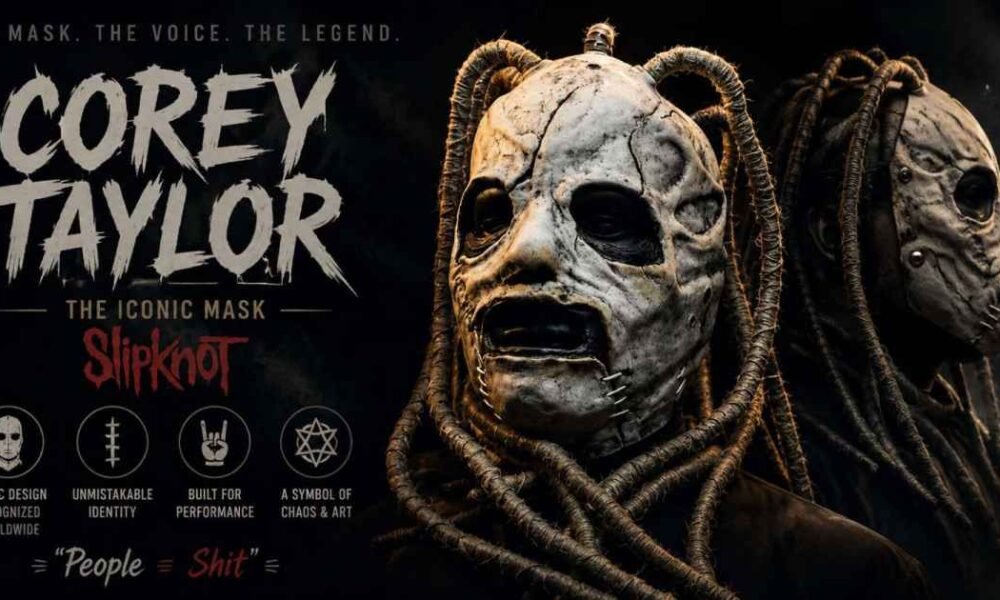
ToggleFew stage costumes in heavy metal history are as recognizable as the Corey Taylor mask. As the frontman of Slipknot, Corey Taylor has reinvented his appearance with nearly every album cycle, making each mask a visual symbol of a new era in the band’s music and artistic identity.
From the iconic dreadlocked Crash Test Dummy mask of the late 1990s to the haunting modern designs seen in recent tours, every Corey Taylor mask tells a unique story. In this 2026 guide, we’ll explore the history, meanings, evolution, and enduring popularity of Corey Taylor’s legendary masks.
Who Is Corey Taylor and Why Does He Wear a Mask?
Corey Taylor is an American singer, songwriter, author, and musician best known as the lead vocalist of Slipknot and the rock band Stone Sour. He joined Slipknot in 1997, replacing original vocalist Anders Colsefni and quickly became one of the defining voices of modern heavy metal.
Slipknot’s signature masks began as a creative concept introduced by percussionist Shawn “Clown” Crahan. The idea was to shift attention away from the musicians as individuals and place the focus on the music, performance, and collective identity of the band. Over time, the masks became one of the band’s most recognizable trademarks.
For Corey Taylor, each new mask also represents a different chapter in his personal life, artistic growth, and Slipknot’s evolving sound.
The Evolution of Corey Taylor’s Masks
One of the reasons fans remain fascinated with the Corey Taylor mask is that it changes with nearly every major album.
1999 – Self-Titled Era
Corey’s first widely recognized mask featured an inside-out Crash Test Dummy mask with long dreadlocks made partly from his own hair. It perfectly matched the raw aggression and chaotic energy of Slipknot’s debut album.
This mask quickly became one of the most iconic images in heavy metal history.
2001 – Iowa
For the Iowa album, Corey introduced a darker, tighter-fitting design with smaller eye openings and a more disturbing appearance.
Many fans consider this version among the band’s most frightening masks because of its minimalistic yet unsettling design.
2004 – Vol. 3: (The Subliminal Verses)
The next evolution became known by fans as the Vol. 3 mask.
Its stitched appearance, exposed mouth, and horror-inspired styling reflected both psychological tension and artistic experimentation.
The Most Famous Corey Taylor Masks
Over nearly three decades with Slipknot, Corey has worn numerous memorable designs.
Some of the most famous include:
- Crash Test Dummy Mask
- Ghost Glow Mask
- Iowa Mask
- Vol. 3 Mask
- All Hope Is Gone Mask
- The Gray Chapter “Skin Face” Mask
- We Are Not Your Kind Transparent Mask
- The End, So Far White Mask
- 2023–2026 Updated Anniversary Variants
Each redesign reflects not only a different musical era but also Corey’s changing artistic vision. Fans and collectors often rank these masks based on creativity, stage presence, and emotional impact.
What Do Corey Taylor’s Masks Mean?
Unlike ordinary stage costumes, Corey Taylor’s masks often carry symbolic meaning.
Throughout interviews over the years, Corey has explained that his masks frequently represent personal emotions, transformation, fear, isolation, and identity.
Some common themes include:
- Personal evolution
- Inner darkness
- Psychological conflict
- Creative freedom
- Emotional vulnerability
- Reinvention
The masks also fit perfectly within Slipknot’s theatrical performances, helping create an immersive visual experience that complements the band’s aggressive sound.
Several later masks have also drawn inspiration from classic horror imagery and films, reinforcing Slipknot’s unsettling visual identity.
How the Masks Changed with Every Slipknot Era
Every Slipknot album introduces both musical and visual changes.
During All Hope Is Gone, Corey adopted a darker metallic mask that emphasized intimidation.
For .5: The Gray Chapter, he revealed the controversial Skin Face Mask, which resembled stitched human skin and divided fan opinion.
The We Are Not Your Kind era featured a transparent silicone mask that Corey altered with changing makeup designs, making each performance visually unique.
Following the pandemic, he introduced a revised white mask with stitched details and metal accents, later refining it again during subsequent tours. Most recently, anniversary-era updates continue to pay tribute to Slipknot’s early aesthetic while incorporating modern design elements.
Why Corey Taylor’s Masks Remain Popular in 2026
More than twenty-five years after Slipknot’s breakthrough, the Corey Taylor mask remains one of heavy metal’s most recognizable symbols.
Several factors explain its lasting popularity.
Instant Recognition
Even casual music fans can identify Corey Taylor by his ever-changing masks.
Album Identity
Every Slipknot album cycle introduces fresh artwork, costumes, and stage designs centered around new masks.
Collector Appeal
Replica Corey Taylor masks have become highly sought-after collectibles among Slipknot fans worldwide.
Cosplay and Halloween
His masks remain popular choices for cosplay conventions, horror events, and Halloween celebrations.
Fan Discussions
Online communities continue debating which Corey Taylor mask is the greatest. While preferences differ, the Self-Titled, Iowa, and Vol. 3 masks consistently rank among fan favorites.
Frequently Asked Questions About Corey Taylor’s Mask
Why does Corey Taylor wear a mask?
The mask supports Slipknot’s artistic concept by emphasizing the band’s collective identity while allowing Corey to express different emotions and themes through each era.
How many masks has Corey Taylor worn?
Corey has worn multiple major mask designs, with numerous variations and updates introduced throughout Slipknot’s different album cycles.
Which Corey Taylor mask is the most famous?
Most fans consider the 1999 Self-Titled Crash Test Dummy mask and the Iowa mask to be his most iconic creations.
Does Corey design his own masks?
Corey collaborates with professional artists and mask makers, contributing ideas that reflect the artistic direction of each Slipknot era.
Will Corey Taylor create another new mask?
Slipknot has a long tradition of evolving its visual identity, so many fans expect future tours and albums to feature additional mask designs, although any new versions will be announced officially by the band.
Conclusion
The Corey Taylor mask is far more than a piece of stage costume—it is a defining symbol of Slipknot’s identity, artistic evolution, and enduring influence on heavy metal culture. From the unforgettable dreadlocked mask of the band’s debut to the sophisticated horror-inspired designs of recent years, each version captures a distinct moment in Corey’s personal and creative journey.
In 2026, fans continue to celebrate these masks not only for their striking appearance but also for the stories they tell about transformation, emotion, and performance. Whether you’re a lifelong Slipknot fan, a collector of replica masks, or someone discovering the band for the first time, the evolution of Corey Taylor’s masks remains one of the most fascinating visual legacies in modern rock and metal.
You may like
Entertainment
Globo Gym: More Than a Movie, It’s a Marketing and Fitness Cautionary Tale
Published
3 weeks agoon
July 10, 2026
Table of Contents
ToggleIntroduction
In the pantheon of early 2000s comedies, few have left as indelible a mark on pop culture as Dodgeball: A True Underdog Story. While the film is celebrated for its hilarious cast and quotable one-liners, its most enduring legacy might be the fictional mega-gym at the heart of its conflict: Globo Gym. More than just a backdrop for Ben Stiller’s over-the-top antagonist, White Goodman, Globo Gym serves as a perfect satire of the corporate fitness industry, a cautionary tale about toxic marketing, and a cultural shorthand for everything that can go wrong when profit is prioritized over people . For anyone interested in fitness, marketing, or simply understanding why some gyms thrive while others feel soulless, a deep dive into the world of Globo Gym reveals some surprisingly profound truths. This article will explore the cinematic origins of Globo Gym, break down its infamous marketing strategy, and examine how the rivalry with “Average Joe’s” Gymnasium reflects real-world choices in the fitness industry.
The Cinematic Origins: Creating a Cultural Icon
To understand the phenomenon of Globo Gym, one must first revisit its origins in the 2004 comedy classic. The film masterfully introduces us to two warring worlds: the shiny, corporate Globo Gym and the rundown, community-focused Average Joe’s Gymnasium . Globo Gym is presented not just as a business, but as a “beacon of human physical prowess and perfection,” a multimillion-dollar empire run by the narcissistic White Goodman, who proudly declares himself not just the founder, but also a client . This immediate contrast sets the stage for a classic underdog story, but it also provides a sharp commentary on the fitness landscape. The visual language of the film makes the distinction clear from the very first scene. Globo Gym is shown as a pristine facility packed with high-tech equipment, cosmetic surgery centers, and a clientele of impossibly fit and attractive people, all captured with slick, commercial-style cinematography . In stark contrast, Average Joe’s is depicted as a modest, brick building with outdated equipment, where the owner, Peter LaFleur, can barely afford to keep the lights on . This dichotomy is not just a cinematic device; it reflects a real and ongoing debate about what a gym should be: a polished, transactional space or a supportive, community-oriented one . The film’s staying power, and Globo Gym‘s iconic status, is largely due to how effectively it satirized the hyper-masculine, exclusionary, and often absurd culture of the fitness industry at its most commercial .
Deconstructing the Globo Gym Marketing Manifesto
Perhaps the most brilliant and memorable aspect of Globo Gym is its in-universe marketing. The commercial that opens the film is a masterclass in satirical advertising, and its core message is as disturbing as it is effective . The narrator begins by asking the viewer if they are “tired of being out of shape and out of luck with the opposite sex,” preying directly on common insecurities . White Goodman then takes over, delivering lines that have become legendary for their outrageousness: “Here at Globo Gym, we understand that ‘ugliness’ and ‘fatness’ are genetic disorders, much like baldness or necrophilia, and it’s only your fault if you don’t hate yourself enough to do something about it” . This pitch—based on shame, self-hatred, and the promise of superficial transformation—is a hyperbolized version of some real-world fitness marketing. It promises a “new you,” but frames the “old you” as something to be despised. The commercial also highlights the “quasi-cultural staff of personal alterational specialists” and on-site cosmetic surgery, furthering the idea that membership is about a complete physical overhaul, not simply improved health . This strategy stands in direct opposition to the model employed by Average Joe’s, where the gym is a place for friends to support each other and belong . Globo Gym’s advertisement is a cautionary tale for any business: a message built on humiliation and exclusion can create a powerful, if toxic, brand identity.
The Real-World Legacy: Beyond the Purple Cobras
The legacy of Globo Gym extends far beyond the film’s cult following. The term “globo-gym” has entered the popular lexicon as a pejorative term for large, impersonal, corporate chain gyms . Industry commentators and fitness enthusiasts often use it to describe establishments perceived to be more focused on maximizing memberships and revenue than on fostering a genuine fitness community. The 2024 satirical (and subsequently debunked) news story about a “Globo Gym International” acquiring 350,000 new members from a rival shows just how deeply the name has been embedded in our cultural understanding of the fitness industry as a shorthand for a corporate rival . This real-world usage underscores the film’s prescient satire. The debate between the “globo-gym” model and the “box” gym model (like CrossFit boxes) is a frequent topic in fitness circles . Proponents of the box gym model argue that they offer a stronger sense of community and more dedicated coaching, while defenders of the commercial gym point to amenities, variety of equipment, and lower costs. However, as one analysis points out, the ultimate difference often comes down to the individual’s motivation and goals, suggesting that one model isn’t inherently superior; they just cater to different needs . Globo Gym, then, serves as a lasting archetype of the corporate approach—a reminder that while flashy marketing and state-of-the-art facilities can attract members, a sense of belonging and genuine support, as seen in Average Joe’s, can build a loyal community.
Conclusion
Globo Gym, born from the comedic genius of Dodgeball: A True Underdog Story, has become far more than just a fictional antagonist. It is a cultural touchstone, a satirical warning, and a powerful symbol of the excesses of the corporate fitness industry. Through its iconic, shame-based marketing and its stark contrast with the community-centric Average Joe’s, the film and its fictional gym force us to question what we truly value in a fitness space. Is it the promise of a superficial, “Franken-fine” transformation, or is it the support of a community that accepts you as you are? The film’s happy ending, where the underdogs win, suggests that the latter holds more lasting value. The next time you consider a gym membership, remember the lessons of Globo Gym: look beyond the slick advertising and shiny equipment, and find a place that supports your journey, not just your membership fee.
Frequently Asked Questions (FAQ)
Is Globo Gym a real gym?
No, Globo Gym is not a real gym. It is a fictional chain of fitness centers created for the 2004 comedy film Dodgeball: A True Underdog Story . However, the name has become a popular cultural shorthand for large, impersonal, and corporate-style gyms.
What is the motto of Globo Gym?
The slogan for Globo Gym, as declared by its owner White Goodman, is “We’re better than you and we know it” . This tagline perfectly encapsulates the arrogant and exclusionary marketing strategy of the fictional chain.
Who is the owner of Globo Gym?
The owner, operator, and founder of Globo Gym America Corp. is the character White Goodman, played by Ben Stiller . He is portrayed as an egomaniacal, mustachioed fitness guru who is determined to destroy his rival, Average Joe’s Gymnasium.
What is the main difference between Globo Gym and Average Joe’s?
The primary difference is their philosophy and culture. Globo Gym is a corporate, profit-driven mega-gym that focuses on high-tech equipment, expensive amenities, and a message of shame and self-improvement through superficial alteration . Average Joe’s is a small, rundown, and struggling local gym that functions as a supportive community for its misfit members . This contrast is the central conflict of the film.

Corey Taylor Mask : The Complete Guide to Every Slipknot Mask, Meanings, Evolution, and Fan Favorites

Cavira : The Complete Guide to the Meaning, Uses, Businesses, and Why the Name Is Trending

Mene Mene Tekel Upharsin : Meaning, Bible Story, Interpretation, and Spiritual Lessons

EO PIS: Complete Guide to the Electronic Office Personnel Information System in 2026

Nerwey: Unlocking the Power of a Unique Digital Identity for Branding and SEO Success

Mark Hines: The Multifaceted Journey of a Scientist, Athlete, and Thought Leader
Trending
Tech1 month agoEO PIS: Complete Guide to the Electronic Office Personnel Information System in 2026
Uncategorized1 month agoNerwey: Unlocking the Power of a Unique Digital Identity for Branding and SEO Success
Sports4 weeks agoMark Hines: The Multifaceted Journey of a Scientist, Athlete, and Thought Leader
Lifestyle4 weeks agoMercedes Spall: The Untold Story of Timothy Spall’s Daughter Who Chose Privacy Over Fame
Fashion1 month agoJo Wilder: Exploring the Name, Authors, and Educational Impact
Movie4 weeks agoOtelia Cox: The Quiet Strength Behind Hollywood’s Tony Cox
Business4 weeks agoMary Birge: Uncovering the Stories Behind a Name That Spans Centuries and Professions
Politics4 weeks agoSherrill Redmon: From Political Spouse to Feminist Archivist


