
Connect with us

Sports

Steve Coppell: The Architect of Footballing Miracles

Published

on

steve coppell

Introduction

In the often chaotic and high-pressure world of professional football management, few figures command the same level of quiet respect as Steve Coppell. His story is not one of a man who sought the limelight, but of an intellectual and a tactician whose influence on English football has been profound and enduring. From his early days as a flying winger for Manchester United and England to his distinguished managerial career, Coppell’s journey is a masterclass in adaptability and intelligence. He is a man who built empires on modest foundations, transforming clubs like Crystal Palace and Reading into forces that defied their financial constraints. This article delves into the life and career of a true footballing legend, exploring how his unique philosophy, born from a blend of academic rigour and on-pitch experience, created some of the most memorable stories in the modern game.

The Making of a Legend: Player, Scholar, and Winger

Steve Coppell‘s journey to footballing greatness began not with a single-minded focus on the beautiful game, but with a dual commitment to his education. Born in Liverpool, he was a prodigious talent on the wing, but rather than signing for a top club immediately, he chose to join Tranmere Rovers. This decision was driven by his desire to study for a degree in Economics at the University of Liverpool, a pursuit he continued even after his career took off . This intellectual foundation would become a hallmark of his managerial style, bringing a level of thought and analysis that set him apart.

His move to Manchester United in 1975 for £60,000 marked a turning point . He quickly became a key component of Tommy Docherty’s exciting young team, known for his blistering pace, tireless work rate, and pinpoint crossing . His playing career was defined by thrilling FA Cup runs and a consistent presence at the highest level. He was an ever-present for United, setting a record for the most consecutive appearances for an outfield player—a staggering 207 games from 1977 to 1981 . This consistency earned him 42 caps for England, representing his country at the 1982 World Cup .

The 1970s and early 80s saw Coppell at the heart of Manchester United’s most successful cup campaigns of the era. He was a key part of the team that won the FA Cup in 1977, scoring the winner against Scotland at Hampden Park in 1978 . He famously remarked on the 1979 FA Cup final, “I had a vision in my head that we would win 4-2 in extra-time,”  a testament to his belief and competitive spirit. Tragedy struck in 1983 when a vicious challenge on international duty shattered his knee, forcing him into early retirement at just 28 . It was a cruel end to a stellar playing career, but it paved the way for an even more remarkable chapter as a manager.

The Crystal Palace Renaissance and the ‘We’ll Show Them’ Mentality

When Coppell was appointed manager of Crystal Palace in 1984 at the age of 28, he was the youngest manager in the Football League . It was a baptism of fire. He has candidly admitted that his first year was a case of “the blind leading the blind,” a steep learning curve where he had to adapt his vision of expansive football to the limitations of his squad . This period of hardship forged the resilience that would define his career. The early days were chaotic, with minimal resources and a part-time scout, forcing Coppell to scout players himself .

However, it was this very struggle that led to one of the greatest discoveries in modern English football: Ian Wright. Through a contact in non-league football, Coppell brought in a “rough diamond” named Ian Wright for a trial. After just three days of training, Coppell told his chairman, “This will sound crazy, but this lad has the ability to play for England.” Wright went on to become a club legend and an international superstar, his raw talent and determination perfectly embodying the “we’ll show them” mentality Coppell had instilled in the squad .

Coppell’s first spell at Palace was nothing short of miraculous. He led the club to promotion to the First Division via the play-offs in 1989. The following season, they reached the 1990 FA Cup Final, losing to Manchester United after a replay . Perhaps most remarkably, the year after that, in the 1990-91 season, Crystal Palace finished third in the old First Division, their highest-ever league finish . This was achieved with a squad built on budget signings and non-league talent, a testament to Coppell’s ability to build a team that was greater than the sum of its parts. He managed the club in four separate spells, a testament to his enduring bond with the club and his ability to navigate its frequent financial and administrative turmoil .

A Season from Heaven: 106 Points and the Reading Miracle

While his work at Crystal Palace is legendary, Steve Coppell‘s magnum opus came during his tenure at Reading. Taking over in 2003, he inherited a club that had never played in the top flight. His philosophy of building a young, hungry, and disciplined squad was perfectly suited to the environment . However, it was the 2005-2006 season that sealed his place in football history. Coppell describes it as the “season sent from heaven,” a campaign where everything clicked into place . Reading dominated the Championship, losing just twice in 46 games and amassing a staggering 106 points, a record that still stands to this day .

This wasn’t just about winning; it was about a relentless, almost robotic pursuit of excellence. Coppell’s meticulous preparation and the players’ belief in his system created an unstoppable force. “From the very first day of pre-season, there was a clear sense of urgency,” he recalled, noting that the squad’s youth and inexperience combined with a shared drive to prove themselves at the top level . The team clinched promotion in March, securing the title shortly after, and earning a historic place in the Premier League .

He often jokes that he “did the least amount of work” in that record-breaking season, a testament to how well-oiled the machine he had built had become . This achievement was widely recognised, earning him the League Managers Association’s Manager of the Year award . The club’s first season in the Premier League was equally impressive. Defying all expectations, they finished eighth, a mere point away from a UEFA Cup spot. Coppell’s calm, intelligent approach allowed the team to thrive, earning them plaudits from across the footballing world, including from Sir Alex Ferguson, who described him as “calm, intelligent and not too emotional” .

The Philosophy of a Footballing Mind: Discipline and Flair

Steve Coppell’s success is rooted in a clear, consistent football philosophy that balances tactical discipline with attacking flair. He is an avowed disciple of Tommy Docherty, his first manager at Manchester United, who instilled in him the importance of entertaining football . He also acknowledges the influence of watching wingers like Ian Callaghan as a boy, which is why “width in my teams” has always been a priority . Despite this, he is famously pragmatic, famously telling his Reading side they were “budgeting for zero points” against the top teams to take the pressure off .

His management style is often described as “calm, intelligent, and not too emotional” by his peers , but this exterior belies a fierce determination and a deep desire to win. He has been open about the loneliness of management and the feeling that “the drug that keeps you in management is the victory” . He is a student of the game who has always sought to innovate by watching other coaches in Europe, taking a break between jobs at Crystal Palace and Brentford to observe Jean Tigana’s methods at Fulham . This blend of academic intelligence, practical experience, and a relentless desire to learn made him one of the shrewdest tacticians of his generation.

Global Influence: A Stint in the Indian Super League

Steve Coppell’s influence was not confined to the shores of England. In 2016, he embarked on a new chapter in his career, bringing his wealth of experience to the burgeoning Indian Super League (ISL) . He first took over at Kerala Blasters, a club that had finished bottom the previous season. Instilling his trademark discipline and organisation, he built a side based on defensive solidity and sharp counter-attacks, leading them to a remarkable turnaround that saw them finish second and reach the final .

He then took on the challenge of building a new club from scratch at Jamshedpur FC, laying the foundations for an identity of resilience and grit . His final stop in India was with the two-time champions ATK. While he did not win a trophy in India, his impact was profound. He was remembered for his professionalism, his calm approach, and his ability to instil a steely discipline and belief in his teams . His tenure in the ISL demonstrated that his managerial principles were not just effective in the English leagues but were universally applicable, earning him respect and admiration from a new generation of fans.

A Lasting Legacy

Steve Coppell’s career is a testament to the power of intelligence, resilience, and an unshakeable belief in a set of principles. He is the architect of miracles, a man who consistently overachieved by building cohesive, disciplined teams that defied expectations. His legacy is not written in silverware alone, but in the memories of fans who watched their clubs achieve the impossible under his guidance. He remains one of the most respected and beloved figures in English football, a true gentleman and a genius of the game whose story will inspire generations to come.

Frequently Asked Questions (FAQ)

Q: What is Steve Coppell’s most significant achievement as a manager?
A: He is renowned for leading Reading to the Premier League for the first time in their history in 2006, amassing a record-breaking 106 points in the Championship in the process. This is often considered one of the greatest achievements in modern English football .

Q: How did Steve Coppell discover Ian Wright?
A: Coppell signed Ian Wright from non-league football after receiving a tip from a local manager. After just three days of training, Coppell was so impressed that he told his chairman that Wright would play for England, a prediction that came true .

Q: How long did Steve Coppell’s playing career last, and why did it end?
A: His playing career was cut short at the age of 28 due to a severe knee injury he sustained while playing for England in a World Cup qualifier against Hungary in 1981 .

Q: Did Steve Coppell manage any clubs outside of England?
A: Yes, he managed three clubs in the Indian Super League (ISL): Kerala Blasters, Jamshedpur FC, and ATK, between 2016 and 2019 .

Q: How many times has Steve Coppell managed Crystal Palace?
A: He managed Crystal Palace on four separate occasions over his career: 1984-1993, 1995-1996, 1997-1998, and 1999-2000 .

Continue Reading
Click to comment

Leave a Reply

Your email address will not be published. Required fields are marked *

Sports

Blackburn Rugby Club (Guide): History, Teams, Facilities, Membership, and Community Legacy

Published

on

Blackburn Rugby Club (Guide): History, Teams, Facilities, Membership, and Community Legacy

Blackburn Rugby Club, officially known as Blackburn Rugby Union Football Club (Blackburn RUFC), is one of Lancashire’s respected community rugby clubs with a proud tradition of competitive rugby, player development, and community involvement. Over the years, the club has built a strong reputation for welcoming players of all ages and abilities while promoting the core values of rugby union—teamwork, respect, discipline, and sportsmanship.

In 2026, searches for Blackburn Rugby Club, Blackburn RUFC fixtures, Blackburn Rugby membership, Blackburn junior rugby, and Blackburn Rugby Club teams continue to grow as players, families, and supporters seek information about one of the region’s established rugby clubs.

This complete guide explores Blackburn Rugby Club’s history, home ground, senior and junior teams, facilities, coaching philosophy, league participation, community impact, and future ambitions.


The History of Blackburn Rugby Club

Blackburn Rugby Union Football Club has been an important part of Lancashire’s sporting landscape for many decades. Throughout its history, the club has provided opportunities for local players to enjoy competitive rugby while building lasting friendships and developing valuable life skills.

Like many successful community rugby clubs across England, Blackburn RUFC has experienced league promotions, challenging seasons, memorable victories, and continuous development. These experiences have strengthened the club’s identity and reinforced its commitment to sustainable growth.

The club has remained dedicated to balancing competitive success with grassroots participation, ensuring rugby remains accessible to players of every background and experience level.

Today, Blackburn Rugby Club continues to represent the values that have long defined English rugby union while embracing modern coaching methods and player welfare initiatives.


Home Ground and Club Facilities

The home of Blackburn Rugby Club serves as the center of club activity throughout the rugby season.

Designed to support training, competitive fixtures, youth development, and social events, the club’s facilities provide an excellent environment for players and supporters alike.

Typical facilities include:

  • Well-maintained rugby pitches
  • Floodlit training areas
  • Modern changing rooms
  • Clubhouse with hospitality facilities
  • Function rooms for club events
  • Spectator viewing areas
  • Refreshment services
  • On-site parking

The clubhouse plays an important role beyond rugby, hosting awards evenings, fundraising events, family celebrations, and community gatherings that strengthen the club’s close-knit atmosphere.


Senior Teams and Competitive Rugby

Competitive rugby remains central to the identity of Blackburn RUFC.

The club fields senior teams that compete in organized rugby union leagues and regional cup competitions throughout the season.

Players participate in:

  • League fixtures
  • Cup competitions
  • Friendly matches
  • Development fixtures
  • Pre-season preparation games

The coaching staff places strong emphasis on:

  • Tactical awareness
  • Technical skill
  • Physical conditioning
  • Leadership
  • Communication
  • Match discipline

Senior rugby provides players with opportunities to develop individually while contributing to the collective success of the team.


Junior Rugby and Player Development

One of Blackburn Rugby Club‘s greatest strengths is its commitment to developing future generations of rugby players.

The club operates comprehensive youth rugby programs that introduce children to the game while helping experienced young players continue progressing through structured coaching pathways.

Junior opportunities often include:

  • Mini rugby
  • Age-grade teams
  • Skills development sessions
  • Rugby festivals
  • Holiday coaching camps
  • Development academies

Training focuses on several important areas.

Technical Skills

Young players improve tackling, passing, kicking, catching, rucking, and ball-handling techniques.

Physical Development

Age-appropriate fitness, agility, speed, coordination, and strength exercises prepare players for competitive rugby.

Tactical Understanding

Players develop decision-making, positioning, teamwork, and match awareness through game-based coaching.

Personal Growth

Blackburn RUFC encourages respect, confidence, resilience, leadership, discipline, and sportsmanship in every training session.

These programs help create clear pathways into senior rugby while promoting lifelong participation in the sport.


Membership and Community Involvement

Blackburn Rugby Club is much more than a place to play rugby—it is an important community organization.

The club welcomes players, families, volunteers, sponsors, and supporters who all contribute to creating a positive rugby environment.

Membership opportunities commonly include:

  • Senior playing memberships
  • Junior memberships
  • Family memberships
  • Social memberships
  • Volunteer roles

Community activities often include:

  • Youth rugby festivals
  • Charity fundraising events
  • Club dinners
  • Awards evenings
  • School partnerships
  • Community coaching sessions
  • Family fun days

These initiatives strengthen relationships between the rugby club and the wider Blackburn community while encouraging greater participation in grassroots sport.


Why Blackburn Rugby Club Continues to Thrive

Several key factors explain why Blackburn RUFC remains one of Lancashire’s respected community rugby clubs.

Strong Rugby Heritage

Generations of players have contributed to the club’s proud sporting tradition.

Quality Coaching

Qualified coaches focus on technical improvement, tactical understanding, and player welfare.

Inclusive Environment

The club welcomes participants of all ages and experience levels, making rugby accessible to everyone.

Youth Development

Investment in junior rugby ensures a steady pathway for future senior players.

Dedicated Volunteers

Volunteers support coaching, administration, fundraising, hospitality, and matchday operations, helping the club operate successfully throughout the year.

Together, these strengths provide a solid foundation for long-term success both on and off the field.


The Future of Blackburn Rugby Club

Looking ahead to 2026 and beyond, Blackburn Rugby Club continues pursuing sustainable growth while maintaining its community-focused philosophy.

Future priorities include:

  • Expanding junior rugby participation
  • Supporting women’s and girls’ rugby initiatives
  • Improving training facilities
  • Recruiting additional qualified coaches
  • Strengthening community partnerships
  • Enhancing player welfare
  • Increasing volunteer involvement
  • Maintaining competitive league performances

These objectives will help ensure Blackburn RUFC continues serving players and supporters for many years to come.


Frequently Asked Questions About Blackburn Rugby Club

What does RUFC stand for?

RUFC stands for Rugby Union Football Club, indicating that the club competes in rugby union.

Does Blackburn Rugby Club have junior teams?

Yes. The club operates a structured junior rugby program with teams across multiple age groups.

Can beginners join Blackburn Rugby Club?

Absolutely. Players of all abilities are welcome, and coaching is available for newcomers as well as experienced rugby players.

Does Blackburn Rugby Club compete in league rugby?

Yes. Senior teams participate in organized rugby union league competitions and regional cup tournaments throughout the season.

Is Blackburn Rugby Club family-friendly?

Yes. The club encourages family participation through youth rugby, volunteering opportunities, social events, and community activities.


Final Thoughts

In 2026, Blackburn Rugby Club (Blackburn RUFC) continues to demonstrate why community rugby union remains such an important part of English sport. Combining competitive league rugby, excellent coaching, strong youth development, modern facilities, and a welcoming club culture, Blackburn RUFC provides opportunities for players of all ages to enjoy and develop within the game.

Whether you’re interested in joining as a player, enrolling your child in junior rugby, volunteering on matchdays, or simply supporting local sport, Blackburn Rugby Club offers a rewarding experience built on respect, teamwork, discipline, and lifelong participation. As the club continues to invest in its facilities, coaching programs, and community partnerships, Blackburn RUFC is well-positioned to build on its proud tradition and remain a valued part of Lancashire’s rugby landscape for generations to come.

Continue Reading

Sports

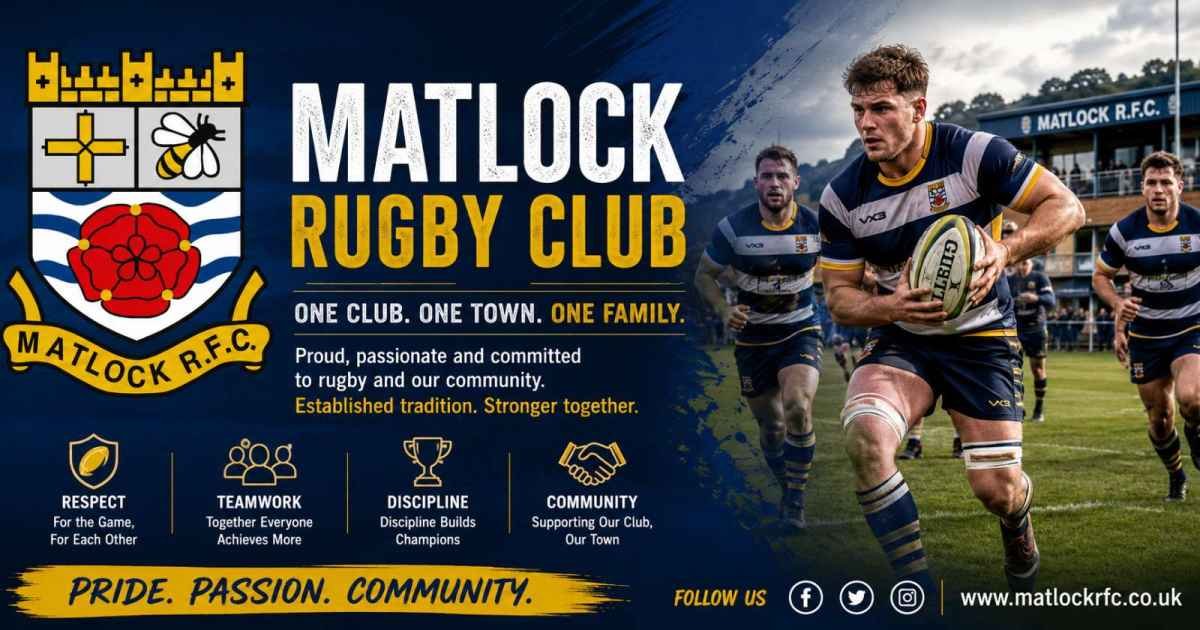
Matlock Rugby Club (Guide): History, Teams, Facilities, Membership, and Community Spirit

Published

on

Matlock Rugby Club (Guide): History, Teams, Facilities, Membership, and Community Spirit

Matlock Rugby Club, officially known as Matlock Rugby Union Football Club (Matlock RUFC), is one of Derbyshire’s respected community rugby clubs. Renowned for its competitive rugby, inclusive culture, youth development, and strong local support, the club has played an important role in promoting rugby union across the region for many years.

In 2026, interest in Matlock Rugby Club, Matlock RUFC fixtures, Matlock Rugby membership, Matlock junior rugby, and Matlock Rugby Club teams continues to grow as players, families, and supporters seek information about one of Derbyshire’s established rugby clubs.

This comprehensive guide explores the history, home ground, senior and junior teams, coaching philosophy, community involvement, facilities, membership opportunities, and future ambitions of Matlock Rugby Club.


The History of Matlock Rugby Club

Matlock Rugby Union Football Club has built a proud reputation within Derbyshire through decades of commitment to grassroots rugby, player development, and community engagement. Since its formation, the club has provided opportunities for players of all ages and abilities to enjoy rugby union in a supportive and competitive environment.

Like many successful community rugby clubs, Matlock RUFC has experienced periods of growth, league competition, and club development while remaining committed to the traditional values of rugby—respect, discipline, teamwork, and sportsmanship.

Generations of players, coaches, volunteers, sponsors, and supporters have contributed to the club’s success, helping establish Matlock Rugby Club as a respected name within regional rugby.


Home Ground and Club Facilities

The home of Matlock Rugby Club serves as the center of club life throughout the rugby season.

The facilities are designed to support competitive matches, regular training sessions, youth development programs, and social activities that bring members together.

Typical facilities include:

  • Well-maintained rugby pitches
  • Floodlit training areas
  • Modern changing rooms
  • Clubhouse with hospitality facilities
  • Function rooms for events
  • Spectator viewing areas
  • Refreshment services
  • On-site parking

The clubhouse plays an important role beyond matchdays, hosting club dinners, fundraising events, presentations, and community gatherings throughout the year.


Senior Rugby Teams and League Competition

Competitive rugby is at the heart of Matlock RUFC.

The club fields senior teams that participate in organized rugby union leagues and cup competitions, giving players the opportunity to compete against clubs from across the region.

Throughout the season, teams take part in:

  • League fixtures
  • Regional cup competitions
  • Friendly matches
  • Pre-season fixtures
  • Development games

Senior rugby at Matlock emphasizes:

  • Tactical awareness
  • Physical conditioning
  • Technical skill
  • Teamwork
  • Leadership
  • Match discipline

Experienced coaches work closely with players to improve performance while maintaining a positive and enjoyable rugby environment.


Junior Rugby and Player Development

One of the club’s greatest strengths is its commitment to developing young rugby players.

Matlock Rugby Club operates junior rugby programs that introduce children to the sport while helping experienced young players progress through structured coaching.

Youth opportunities commonly include:

  • Mini rugby
  • Junior age-grade teams
  • Rugby festivals
  • Skills development sessions
  • Holiday coaching camps
  • Academy-style training

Training focuses on every aspect of player development.

Technical Skills

Players improve passing, tackling, kicking, catching, ball handling, and breakdown techniques.

Physical Development

Fitness, agility, coordination, balance, and strength training are introduced in age-appropriate ways.

Tactical Understanding

Young players learn positioning, communication, teamwork, and game management.

Personal Development

The club encourages confidence, resilience, respect, leadership, and sportsmanship—qualities that benefit players both on and off the field.

This structured pathway helps prepare talented players for senior rugby while encouraging lifelong participation in the sport.


Membership and Community Involvement

Matlock Rugby Club is built on a strong sense of community.

The club welcomes players, parents, volunteers, supporters, and local businesses who all contribute to creating a vibrant rugby environment.

Membership options often include:

  • Senior playing membership
  • Junior membership
  • Family membership
  • Social membership
  • Volunteer opportunities

Community activities regularly include:

  • Charity fundraising
  • Youth rugby festivals
  • Club social evenings
  • Awards presentations
  • School partnerships
  • Community coaching sessions
  • Volunteer appreciation events

These activities strengthen the connection between the rugby club and the wider Matlock community while encouraging greater participation in sport.


Why Matlock Rugby Club Continues to Grow

Several factors explain why Matlock RUFC remains one of Derbyshire’s respected community rugby clubs.

Strong Rugby Tradition

Years of competitive rugby have created a proud sporting heritage.

Excellent Coaching

Qualified coaches focus on player improvement at every age level.

Youth Development

A comprehensive junior program ensures the club continues developing future players.

Inclusive Club Culture

The club welcomes participants regardless of experience, helping everyone enjoy rugby in a supportive environment.

Dedicated Volunteers

Behind every successful rugby club are volunteers who organize fixtures, maintain facilities, support fundraising, and ensure smooth matchday operations.

Together, these strengths create a sustainable foundation for continued success.


The Future of Matlock Rugby Club

Looking ahead to 2026 and beyond, Matlock Rugby Club continues working toward long-term growth while preserving its community values.

Key priorities include:

  • Expanding junior rugby participation
  • Improving rugby facilities
  • Recruiting additional qualified coaches
  • Supporting women’s and girls’ rugby development
  • Increasing volunteer involvement
  • Building stronger community partnerships
  • Enhancing player welfare initiatives
  • Maintaining competitive league performances

By investing in people, facilities, and coaching, the club aims to remain a leading rugby destination within Derbyshire.


Frequently Asked Questions About Matlock Rugby Club

What does RUFC stand for?

RUFC stands for Rugby Union Football Club, distinguishing the club from rugby league organizations.

Does Matlock Rugby Club have junior teams?

Yes. The club operates a structured junior rugby section with coaching and competitive opportunities across multiple age groups.

Can beginners join Matlock Rugby Club?

Absolutely. Players of all abilities are encouraged to join, with coaching available for both newcomers and experienced rugby players.

Does Matlock Rugby Club compete in league rugby?

Yes. Senior teams participate in organized rugby union league competitions and regional cup tournaments during the season.

Is Matlock Rugby Club family-friendly?

Yes. The club promotes a welcoming environment through youth rugby, social events, volunteering opportunities, and community-focused activities.


Final Thoughts

In 2026, Matlock Rugby Club (Matlock RUFC) continues to showcase everything that makes community rugby union so valuable. Through competitive league rugby, excellent coaching, thriving youth development, dedicated volunteers, and a welcoming club culture, the club provides opportunities for players of all ages to grow both on and off the field.

Whether you’re looking to join as a player, introduce your child to rugby, support local sport, or become part of an active community club, Matlock Rugby Club offers an outstanding environment built on respect, teamwork, discipline, and lifelong participation. As the club continues to invest in its facilities, coaching programs, and community partnerships, Matlock RUFC is well-positioned to inspire future generations and remain a proud representative of Derbyshire rugby for many years to come.

Continue Reading

Sports

Morley RUFC (Guide): History, Teams, Facilities, Community, and Everything You Need to Know

Published

on

Morley RUFC (Guide): History, Teams, Facilities, Community, and Everything You Need to Know

Morley RUFC (Morley Rugby Union Football Club) is one of Yorkshire’s most respected community rugby clubs, known for its rich history, competitive rugby, youth development, and strong local support. For generations, the club has provided players of all ages with opportunities to compete, develop their skills, and enjoy the values that define rugby union—teamwork, discipline, respect, and commitment.

In 2026, interest in Morley RUFC, Morley Rugby Club fixtures, Morley RUFC membership, Morley rugby teams, and Morley RUFC juniors continues to grow as supporters, players, and families follow one of West Yorkshire’s established rugby clubs.

This comprehensive guide explores everything you need to know about Morley RUFC, including its history, facilities, senior and junior teams, coaching philosophy, community involvement, and future ambitions.


The History of Morley RUFC

Morley Rugby Union Football Club has a proud heritage that stretches back more than a century, making it one of the long-established rugby clubs in West Yorkshire. Since its formation, the club has built a reputation for playing competitive rugby while maintaining a welcoming environment for players, volunteers, and supporters.

Throughout its history, Morley RUFC has competed in various levels of the English rugby union league structure, experiencing successful seasons, memorable victories, and periods of rebuilding. These experiences have helped shape the club’s identity and strengthened its position within the regional rugby community.

The club has always placed equal importance on sporting success and community values, encouraging participation from players of all abilities while fostering lifelong friendships through rugby.


Home Ground and Club Facilities

The home of Morley RUFC serves as more than just a venue for rugby matches. It is a gathering place where players, supporters, and families come together throughout the season.

The club’s facilities are designed to support training, competitive fixtures, and social events.

Key features typically include:

  • Well-maintained rugby pitches
  • Floodlit training areas
  • Modern changing rooms
  • Clubhouse with hospitality facilities
  • Spectator viewing areas
  • Function rooms for club events
  • Refreshment and catering services
  • Parking for visitors

These facilities enable Morley RUFC to host league fixtures, junior festivals, training sessions, fundraising activities, and community events throughout the rugby calendar.


Senior Teams and Competitive Rugby

Competitive rugby remains central to Morley RUFC’s identity.

The club regularly fields senior squads that compete in organized rugby union leagues and cup competitions, providing players with opportunities to develop and perform at a high standard.

Throughout the season, teams participate in:

  • League fixtures
  • Cup competitions
  • Friendly matches
  • Pre-season preparation games
  • Regional rugby tournaments

Senior rugby at Morley emphasizes:

  • Tactical awareness
  • Physical conditioning
  • Teamwork
  • Discipline
  • Leadership
  • Continuous improvement

Players benefit from experienced coaching and a competitive yet supportive environment that encourages long-term development.


Junior Rugby and Player Development

One of Morley RUFC‘s greatest strengths is its commitment to grassroots rugby.

The club operates an extensive junior section, introducing children and teenagers to rugby union in a safe, enjoyable, and structured environment.

Youth rugby programs often include:

  • Mini rugby
  • Junior age-grade teams
  • Academy-style development sessions
  • Holiday coaching camps
  • Skills workshops
  • Rugby festivals

Coaches focus on helping young players develop:

Core Rugby Skills

Passing, tackling, catching, kicking, rucking, and ball handling form the foundation of every training session.

Physical Development

Age-appropriate fitness, agility, coordination, and strength exercises prepare players for competitive rugby.

Tactical Understanding

Players learn positioning, game management, teamwork, and decision-making through structured coaching.

Personal Growth

The club emphasizes confidence, respect, leadership, resilience, and sportsmanship both on and off the field.

By investing in junior rugby, Morley RUFC helps secure the future of the sport while creating pathways into senior rugby.


Community Spirit and Club Culture

One of the defining characteristics of Morley Rugby Union Football Club is its strong community spirit.

The club is supported by players, parents, volunteers, sponsors, and loyal supporters who contribute countless hours to ensuring rugby remains accessible for everyone.

Community activities include:

Youth Development Programs

Providing opportunities for children to participate in organized sport while building confidence and teamwork.

Volunteer Support

Volunteers assist with coaching, administration, hospitality, fundraising, and matchday operations.

Social Events

The clubhouse regularly hosts dinners, awards nights, charity fundraisers, family events, and celebrations that strengthen the club community.

Local Partnerships

Morley RUFC works alongside schools, businesses, and community organizations to promote rugby participation and healthy lifestyles.

These initiatives make the club an important part of the wider Morley community.


Why Morley RUFC Continues to Thrive

Several factors have helped Morley RUFC remain one of Yorkshire’s respected rugby clubs.

Rich Rugby Tradition

The club’s long history provides a strong foundation built on generations of players and supporters.

Quality Coaching

Qualified coaches focus on technical development, tactical understanding, and player welfare.

Inclusive Environment

Players of different ages and experience levels are welcomed and encouraged to enjoy rugby.

Strong Volunteer Network

Dedicated volunteers help maintain facilities, organize events, and support every aspect of club operations.

Focus on Youth

Investment in junior rugby ensures continued player development and long-term sustainability.

Together, these strengths allow Morley RUFC to remain competitive while preserving the welcoming atmosphere that attracts new members each year.


The Future of Morley RUFC

Looking ahead to 2026 and beyond, Morley Rugby Union Football Club continues to pursue sustainable growth while maintaining its community-focused philosophy.

Future priorities include:

  • Expanding junior rugby participation
  • Supporting women’s and girls’ rugby initiatives
  • Improving training facilities
  • Recruiting additional qualified coaches
  • Strengthening community partnerships
  • Enhancing player welfare programs
  • Growing membership numbers
  • Maintaining competitive league performances

By balancing sporting ambition with responsible management, Morley RUFC aims to continue serving players and supporters for generations to come.


Frequently Asked Questions About Morley RUFC

What does RUFC stand for?

RUFC stands for Rugby Union Football Club, indicating that the club plays rugby union rather than rugby league.

Does Morley RUFC have junior teams?

Yes. The club operates a comprehensive junior and youth rugby program with teams across multiple age groups.

Can beginners join Morley RUFC?

Absolutely. The club welcomes players of all experience levels and provides coaching for newcomers as well as experienced rugby players.

Does Morley RUFC compete in league rugby?

Yes. Senior teams participate in organized rugby union league competitions and cup tournaments throughout the season.

Is Morley RUFC family-friendly?

Yes. The club encourages family involvement through youth rugby, social events, volunteering opportunities, and welcoming matchday experiences.


Final Thoughts

In 2026, Morley RUFC continues to exemplify the values that make community rugby union so important. Combining a proud history, competitive senior rugby, excellent youth development, dedicated volunteers, and a welcoming club culture, Morley Rugby Union Football Club remains a vital part of the sporting landscape in West Yorkshire.

Whether you’re interested in joining as a player, enrolling a child in junior rugby, attending league fixtures, or becoming part of a vibrant rugby community, Morley RUFC offers an outstanding environment built on respect, teamwork, and lifelong participation in the sport. As the club continues to invest in facilities, coaching, and community initiatives, it is well-positioned to inspire future generations and remain one of Yorkshire’s most valued rugby institutions.

Continue Reading

Trending