digital
The Ultimate Guide to “MBypass”: Understanding AI Evasion, Humanizers, and the Future of Content Authenticity


Introduction
In the rapidly evolving landscape of artificial intelligence, a new and somewhat controversial term has begun to surface with increasing frequency: “MBypass.” While not a single, monolithic product, the concept of “MBypass” represents a fascinating and critical intersection of several technological trends. At its core, the term encapsulates the growing desire and capability to circumvent, evade, or “bypass” the sophisticated detection systems that have been developed to distinguish between content generated by artificial intelligence and that created by humans.
This article aims to serve as the definitive guide on the subject, delving deep into the various facets of what “MBypass” entails. We will explore its dual nature: from the technical mechanisms of “jailbreaks” that allow AI models to produce restricted content, to the burgeoning market of “AI humanizers” and bypass tools designed to make AI-generated text undetectable. Furthermore, we will navigate the complex ethical landscape these tools inhabit, analyze the technical strategies they employ, and consider their profound implications for the future of content creation, search engine optimization (SEO), and digital trust. Whether you are a content creator, an SEO professional, an academic, or simply an AI enthusiast, understanding the dynamics of MBypass is essential for navigating the new reality of a world saturated with AI-generated content.
What is “MBypass”? Decoding the Term and Its Applications
The term “MBypass” is not a reference to a single, specific software application but rather an umbrella concept that describes technologies and techniques used to defeat or “bypass” AI safety filters and detection algorithms. The “M” can be interpreted in several ways, often depending on the context: it can stand for “Model,” referring to the underlying AI model; “Meta,” as seen in specific tools like the MetaBypass captcha solver, which bypasses CAPTCHA challenges; or “Malicious,” in reference to the intent behind certain jailbreak attempts. Overall, the concept of MBypass manifests in two primary forms: bypassing security filters to generate prohibited content and bypassing detection systems to make AI-generated text appear human-written.
Prompt Decoupling and Advanced Jailbreaks
One of the most sophisticated forms of MBypass is found in the realm of security evasion, particularly in text-to-image (T2I) models. Recent research has identified a phenomenon known as “prompt decoupling,” where a complex and explicitly unsafe prompt is broken down into several independent, semantically simpler sub-prompts. The underlying strategy is that a single sub-prompt, when analyzed in isolation, may not exhibit obvious harmful intent and thus fails to trigger the model’s safety filters.
This decoupling strategy, part of a framework known as MPDA, effectively bypasses safety mechanisms by reconstructing a harmful intent from individually “safe” components. The process leverages large language models (LLMs) to deconstruct an original insecure prompt into six core visual language descriptions: subject, action, condition, environment, atmosphere, and style. By separating the harmful components from the pseudo-safe ones, the attack can generate a base image from the safe elements and then iteratively refine the harmful prompt until it passes safety validation while retaining its malicious intent. This represents a significant evolution in adversarial attacks, moving beyond simple word replacement to sophisticated semantic decomposition that can fool even robust safety filters.
AI Humanizers and Text Evasion
On the content creation side, “MBypass” refers to a booming industry of “AI humanizers” and “bypasser” tools designed to rewrite AI-generated text so that it can evade detection by services like GPTZero, ZeroGPT, and Copyleaks. Tools like BypassGPT, Undetectable AI, HIX Bypass, and others are marketed as solutions for content creators, marketers, and SEO professionals who worry that their AI-assisted writing will be penalized by search engines or content platforms for being “artificial”.
These tools use advanced algorithms, machine learning, and paraphrasing techniques to alter AI-generated content. They restructure sentences, modify vocabulary, adjust writing style, and incorporate “knobs” for readability and purpose, aiming to make the output appear natural and indistinguishable from human-written text. For instance, HIX Bypass offers “Fast,” “Balanced,” “Aggressive,” and “Latest” rewriting modes, each applying a different degree of humanization to the text. The primary promise is that by processing text through these bypass tools, users can reap the efficiency benefits of AI writing while maintaining the “authenticity” required to pass AI detection systems.
The Technical Underpinnings: How MBypass Works
To truly understand the MBypass phenomenon, one must look under the hood at the technical strategies that enable these evasions. These are not simple tricks but sophisticated methods grounded in machine learning and natural language processing.
Gradient-Based Evasion and Model Training
Some of the most advanced evasion techniques, as explored in academic research, utilize the underlying mechanics of AI models themselves. Methods like GradEscape transform evader training into an unsupervised learning problem by passing the gradient of a detector’s classification loss back to the evader. In simpler terms, the evader model learns how to change text specifically to minimize the chance that a target AI detector will flag it, all while trying to maintain the original text’s meaning and structure.
These attacks can be implemented in “open model” scenarios (where the attacker knows the detector’s architecture) or “opaque model” scenarios (where they can only query the detector). In the latter, the attacker trains a surrogate model to mimic the victim detector and then uses that surrogate to train their evader. This highlights a crucial arms race: as detectors become more sophisticated, the methods to defeat them also grow more advanced and technical, moving from simple keyword stuffing to complex, data-driven optimization.
Bit-Level and Mathematical Bypasses
The concept of bypassing also extends to the fundamental logic of AI models. For instance, researchers have developed BitBypass, a “jailbreak attack” that significantly reduces the “Refusal Rate” and increases the “Attack Success Rate” of harmful prompts against major LLMs like GPT-4o, Claude, and Gemini. This technique was even effective at generating phishing content, demonstrating the high degree of danger these advanced methods pose.
Another fascinating approach is a “MathBypass” control, which intercepts arithmetic expressions in prompts. Instead of letting the LLM potentially make errors in carrying operations, this control computes the answer deterministically and forces the model’s token stream to output the correct result, thereby bypassing the model’s own sampling process and preventing errors in arithmetic.
The Ethical and Practical Dilemma
The existence and proliferation of MBypass tools present a significant ethical and practical dilemma. They are a double-edged sword, offering both legitimate utility and opportunities for misuse.
The Case for Humanizers: SEO, Workflow, and Accessibility
From a positive perspective, proponents of tools like BypassGPT and Undetectable AI argue they are essential for maintaining workflow efficiency. AI writing tools are immensely powerful, but their output often has a robotic, “tell-tale” quality that can be off-putting to readers or be penalized by search engine algorithms. In this view, humanizers are simply a form of content optimization, a tool that polishes AI-generated drafts to improve their quality, tone, and readability, much like a human editor would. For SEO professionals creating large volumes of content, these tools can be seen as a way to ensure that AI-generated copy ranks well without being flagged by search engines.
The Case Against: Academic Dishonesty and Erosion of Trust
However, the darker side of MBypass is impossible to ignore. The primary use case of “bypassing detection” is deeply entwined with academic dishonesty, allowing students to pass off AI-generated essays as their own work. Furthermore, these tools can be used to generate massive amounts of indistinguishable, low-quality, or even misleading content, eroding trust in digital media. As one analysis of a similar tool noted, “any ‘bypass’ framing can conflict with institutional rules,” and claims of “100% bypass” are often marketing language rather than a durable guarantee.
The existence of these tools creates an adversarial relationship where the goal is to “fool” a system, rather than to create genuinely valuable content. It forces an arms race: detectors evolve to catch AI-generated text, and bypass tools evolve to evade them. This dynamic doesn’t lead to better content but to more sophisticated deception and a continuous cycle of technological one-upmanship.
Conclusion
The concept of “MBypass” stands as a defining challenge of our AI-driven era. It represents a broad category of technologies and techniques designed to circumvent AI safety filters and detection systems, with applications ranging from security vulnerabilities in AI models to the growing industry of AI humanizers. The technical methods are becoming increasingly advanced, from prompt decoupling and gradient-based evasion to bit-level attacks and deterministic mathematical bypasses, highlighting a sophisticated arms race between AI developers and those seeking to exploit or evade their systems.
The ethical and practical implications are profound. On one hand, these tools can be seen as a necessary evolution in content optimization and workflow efficiency; on the other, they present serious threats to academic integrity, digital trust, and content quality. There is a critical distinction between using AI to augment human creativity—to break through writer’s block or generate a first draft—and using it to completely replace it while hiding that fact. This line is often blurred by tools that prioritize “undetectability” over quality.
Ultimately, the existence of MBypass underscores the need for a more nuanced conversation about our relationship with AI-generated content. It signals a shift from a world where we can easily identify AI’s handiwork to one where authenticity must be verified, and trust must be continuously earned. The future likely holds neither an end to AI detection nor the perfect “bypass,” but a constant, evolving negotiation between these two forces. For content creators, SEO professionals, and users, the path forward lies not just in choosing the right tool, but in using AI as a powerful assistant for authentic human expression, rather than a substitute for it.
Frequently Asked Questions (FAQ)
1. What is the primary purpose of MBypass tools?
The primary purpose of MBypass tools is to alter or restructure text so that it can evade detection by AI content detectors. This includes both AI humanizers that make AI-generated text appear human-written and advanced “jailbreak” techniques that bypass the safety filters of AI models to generate restricted content.
2. Are MBypass tools like BypassGPT and Undetectable AI legal to use?
The legality of using these tools depends on the context. Using them to polish content for SEO or to improve clarity is generally within legal boundaries. However, using them for academic plagiarism, generating misleading information, or other forms of fraud could violate terms of service, institutional policies, and potentially the law. It is essential to be aware of the terms of service of the tool and the platform where the content will be used.
3. How do advanced MBypass techniques like “prompt decoupling” work?
Advanced MBypass techniques, such as the MPDA framework, break down a complex and unsafe prompt into multiple independent, semantically simpler sub-prompts (like subject, action, and environment). When assessed individually, these sub-prompts are “safe” and pass the AI’s filters. The final, generated image or text is then reconstructed from these components, effectively bypassing the safety review to create the desired harmful content.
4. Can MBypass tools guarantee that my content will pass AI detection?
No, no tool can provide a permanent guarantee. As one expert review points out, “guaranteeing detector-bypass is not stable, because detectors evolve and paraphrasing attacks are well-studied”. The landscape is constantly changing, and today’s successful bypass might be tomorrow’s flagged content.
5. Is using an AI humanizer considered unethical?
The ethics depend on your intent. If you are using a humanizer to refine AI-generated text for clarity and tone, it is often seen as a natural part of the editing process. However, if you are using it to present AI-generated work as your own to deceive an institution (e.g., a school) or to manipulate search rankings with low-quality content, it is generally considered unethical and may be a violation of policies. The key lies in the intention and context of use

digital
Katy Cloud (Guide): Everything You Need to Know About Katy Cloud, MyKatyCloud, Features, Login, and Student Resources

As schools continue to embrace digital learning, cloud-based education platforms have become essential for students, teachers, and administrators. One of the most widely used systems within Katy Independent School District (Katy ISD) is Katy Cloud, commonly referred to as MyKatyCloud.
Katy Cloud serves as the district’s centralized Single Sign-On (SSO) portal, allowing authorized users to access educational applications, classroom resources, productivity tools, and district services through one secure login. Instead of remembering multiple usernames and passwords, students and staff can conveniently reach all their approved learning platforms from a single dashboard.
This comprehensive 2026 guide explains everything you need to know about Katy Cloud, including its purpose, features, login process, benefits, troubleshooting tips, and security best practices.
What Is Katy Cloud?
Katy Cloud is the official cloud-based educational portal used by Katy Independent School District (Katy ISD) in Texas. The platform provides students, teachers, administrators, and staff with centralized access to district-approved digital learning resources.
The portal uses Single Sign-On (SSO) technology, allowing users to authenticate once and access multiple educational applications without repeatedly entering login credentials.
Depending on user permissions, Katy Cloud may provide access to:
- Google Workspace for Education
- Microsoft 365
- Learning Management Systems (LMS)
- Digital textbooks
- Educational applications
- Library resources
- Class assignments
- Student productivity tools
- District communication platforms
By consolidating these resources into one portal, Katy Cloud simplifies digital learning while improving account security and user convenience.
Why Katy Cloud Is Important in 2026
Education has become increasingly dependent on online resources, making centralized platforms like Katy Cloud more valuable than ever.
One Secure Login
Instead of maintaining separate credentials for every application, users log in once to access all authorized resources.
Supports Hybrid and Remote Learning
Students can continue learning from:
- Home
- School
- Libraries
- Travel locations
- Any internet-connected device
This flexibility ensures uninterrupted access to coursework and learning materials.
Improved Classroom Efficiency
Teachers spend less time resolving password issues and more time delivering instruction.
Enhanced Security
Centralized authentication enables Katy ISD to implement stronger security policies while simplifying account management.
Key Features of Katy Cloud
Katy Cloud offers numerous features designed to improve both teaching and learning experiences.
Single Sign-On (SSO)
Users authenticate once to access multiple district-approved applications without repeated logins.
Personalized Dashboard
After logging in, each user sees applications relevant to their role within Katy ISD.
For example:
- Students access coursework and educational apps.
- Teachers access classroom management tools.
- Staff access district resources.
Cloud-Based Accessibility
Because Katy Cloud operates online, users can access their accounts through:
- Windows PCs
- Mac computers
- Chromebooks
- Linux devices
- Android phones
- iPhones and iPads
- Supported web browsers
Application Integration
The portal integrates numerous educational services into one easy-to-use interface, eliminating the need to visit multiple websites.
Automatic Updates
District technology administrators can update available applications without requiring users to install software manually.
How to Log In to Katy Cloud
Logging into Katy Cloud is simple for authorized users.
Step 1: Visit the Official Katy Cloud Portal
Always use the official Katy ISD MyKatyCloud login page provided by the district to avoid phishing websites.
Step 2: Enter District Credentials
Sign in using your assigned:
- Username
- Password
Only district-issued credentials should be used.
Step 3: Complete Authentication
If additional security verification is enabled, complete the authentication process before continuing.
Step 4: Access Your Dashboard
Once authenticated, users can immediately launch approved educational applications without additional logins.
Benefits of Using Katy Cloud
Katy Cloud provides substantial advantages for the entire educational community.
Simplified Digital Learning
Students easily locate assignments, digital textbooks, educational software, and classroom resources from one central location.
Greater Productivity
Teachers manage classroom technology more efficiently while reducing login-related technical support requests.
Secure Learning Environment
Single Sign-On allows district administrators to enforce consistent authentication and access policies.
Access From Anywhere
Students remain connected whether learning:
- On campus
- At home
- During travel
- Through remote instruction
Reduced Technical Complexity
A single portal eliminates the need to manage multiple bookmarks, websites, and login credentials.
Common Katy Cloud Login Problems and Solutions
Most login issues can be resolved quickly with basic troubleshooting.
Forgotten Password
If you forget your password, use Katy ISD’s official password recovery process or contact your campus technology department.
Incorrect Username
Verify that you are using your assigned district username rather than a personal email address.
Browser Issues
Clear your browser cache and ensure you are using an updated browser version.
Internet Connectivity
A reliable internet connection is necessary for cloud-based educational services.
Temporary Maintenance
Occasionally, scheduled maintenance may temporarily affect availability. Waiting a short period and trying again often resolves the issue.
Best Practices for Using Katy Cloud Securely
Good cybersecurity habits help protect educational accounts and personal information.
Protect Your Credentials
Never share your district username or password with other students or unauthorized individuals.
Use Strong Passwords
Choose unique passwords that are difficult to guess.
Log Out on Shared Devices
Always sign out after using public or shared computers.
Keep Devices Updated
Regularly update:
- Operating systems
- Browsers
- Antivirus software
- Security applications
to maintain protection against known vulnerabilities.
Beware of Phishing
Only enter your credentials on the official Katy ISD login portal. Ignore suspicious emails requesting account information.
Frequently Asked Questions About Katy Cloud
Who can use Katy Cloud?
Katy Cloud is designed for authorized Katy ISD students, teachers, administrators, and staff.
Is Katy Cloud free?
Yes. The service is provided by Katy Independent School District as part of its educational technology infrastructure.
Can I access Katy Cloud on my phone?
Yes. Because it is cloud-based, users can access Katy Cloud using supported mobile browsers and compatible educational applications.
Is Katy Cloud the same as MyKatyCloud?
Yes. MyKatyCloud is the official online portal commonly referred to as Katy Cloud. Both names refer to the district’s centralized Single Sign-On platform.
What should I do if Katy Cloud isn’t working?
Verify your internet connection, check your login credentials, clear your browser cache, or contact Katy ISD technology support if problems continue.
Final Thoughts
Katy Cloud, also known as MyKatyCloud, has become an essential part of Katy ISD’s digital learning ecosystem in 2026. By providing a secure Single Sign-On (SSO) experience, the platform enables students, teachers, and staff to access educational applications, classroom resources, productivity tools, and district services from one convenient location.
Its cloud-based design supports both traditional classroom instruction and remote learning while improving security, reducing password fatigue, and simplifying access to digital resources. By following recommended cybersecurity practices—such as using strong passwords, protecting login credentials, accessing only the official Katy ISD portal, and keeping devices updated—users can safely take full advantage of everything Katy Cloud offers throughout the 2026 academic year.
digital
Renvoit.com (Guide): Everything You Need to Know About Renvoit.com, Its Purpose, Features, Safety, and Online Presence

The internet is constantly evolving, with new websites and digital platforms appearing every day. One domain that has recently generated curiosity is Renvoit.com. Many users search for the site to understand what it offers, whether it is trustworthy, and how it compares with other emerging online platforms.
As of 2026, Renvoit.com is not widely recognized as a major global technology company or mainstream online service. Because publicly available information remains limited, users should evaluate the website carefully before creating an account, sharing personal information, or downloading any content.
This comprehensive guide explains everything currently known about Renvoit.com, explores its possible uses, discusses security considerations, and provides best practices for safely interacting with unfamiliar websites.
What Is Renvoit.com?
Renvoit.com is an internet domain that has attracted attention because of its distinctive name and growing search interest. Unlike established platforms with extensive public documentation, Renvoit.com currently has a relatively limited online footprint.
Based on common internet practices, a domain like Renvoit.com could serve various purposes, including:
- Technology platform
- Business website
- Software service
- Cloud application
- Online community
- Digital resource portal
- Startup project
- Beta testing platform
However, without official documentation confirming its exact purpose, users should avoid assuming its functionality solely from its name.
Why Is Renvoit.com Gaining Attention in 2026?
Several factors contribute to increased searches for Renvoit.com.
Unique Domain Name
The distinctive branding naturally encourages users to investigate the website after seeing references in search engines, social media, or online discussions.
Growing Interest in Emerging Platforms
Every year, thousands of startups and digital services launch new websites. Curious users often research unfamiliar domains before interacting with them.
Technology Trends
The continued expansion of:
- Artificial Intelligence
- Cloud computing
- Software-as-a-Service (SaaS)
- Digital collaboration
- Online productivity tools
has increased public interest in newly discovered web platforms.
Possible Features and Applications of Renvoit.com
Although its official functionality may vary, platforms like Renvoit.com often provide one or more digital services.
Cloud-Based Services
Modern websites increasingly deliver applications through web browsers without requiring traditional software installation.
Business Productivity
Some platforms focus on:
- Project management
- Team collaboration
- Document sharing
- Workflow automation
- Customer communication
Content Management
Certain websites allow users to organize digital assets, publish information, or manage online content efficiently.
User Account System
Many online platforms include secure user accounts that provide personalized dashboards, saved preferences, and protected data storage.
How to Determine Whether Renvoit.com Is Safe
Whenever exploring an unfamiliar website, users should follow established cybersecurity practices.
Verify HTTPS Encryption
Check that the website uses HTTPS, ensuring encrypted communication between your browser and the server.
Review Website Transparency
Reliable websites generally provide:
- About Us page
- Privacy Policy
- Terms of Service
- Contact information
- Company details
Transparent organizations typically explain how user information is collected and protected.
Research Independent Sources
Search for reviews, technology discussions, or reputable articles before trusting an unfamiliar service.
Avoid Sharing Sensitive Information
Until you are confident the platform is legitimate, avoid entering:
- Passwords
- Credit card information
- Government identification
- Bank account details
- Personal documents
Benefits of Evaluating New Websites Carefully
Researching unfamiliar websites before using them offers several important advantages.
Improved Online Security
Taking time to verify a platform helps reduce exposure to:
- Phishing attacks
- Malware
- Identity theft
- Financial fraud
Better Privacy Protection
Reading privacy policies allows users to understand how personal information may be collected, stored, and shared.
More Confident Internet Browsing
Learning how to evaluate websites enables users to explore new services without unnecessary risk.
Smarter Technology Decisions
Users can compare different platforms before deciding which services best meet their personal or professional needs.
Best Practices Before Using Renvoit.com
If you decide to visit Renvoit.com, following these recommendations can improve your online safety.
Double-Check the URL
Ensure you are visiting the correct website and not a similarly named imitation domain.
Use Strong Passwords
If registration is required, create a strong, unique password that is not reused across other online accounts.
Enable Multi-Factor Authentication
If available, activate multi-factor authentication (MFA) to provide an additional layer of account security.
Keep Your Software Updated
Regularly update:
- Operating system
- Web browser
- Antivirus software
- Security applications
to reduce potential vulnerabilities.
Monitor Account Activity
If you create an account, periodically review login history and account settings for unusual activity.
Frequently Asked Questions About Renvoit.com
Is Renvoit.com a legitimate company?
As of 2026, there is no widely verified public information identifying Renvoit.com as a major international company or officially recognized online platform. Users should evaluate the website independently before interacting with it.
Is Renvoit.com safe?
Safety depends on the website’s implementation and security practices. Users should verify HTTPS encryption, review transparency documents, and avoid sharing sensitive information until they have confirmed the platform’s legitimacy.
Why are people searching for Renvoit.com?
Most interest appears to come from curiosity about the domain name and users seeking reliable information before visiting the website.
Should I create an account?
Only register after reviewing the site’s privacy policy, understanding its terms of service, and confirming that the platform meets your security expectations.
Can new websites become trustworthy?
Yes. Many successful online businesses started as relatively unknown platforms. However, every new service should be evaluated carefully before being trusted with personal information.
Final Thoughts
Renvoit.com is an emerging online domain that has attracted attention because of its unique name and growing search interest. While publicly available information remains limited in 2026, this does not automatically indicate that the website is either trustworthy or unsafe. Instead, it highlights the importance of conducting careful research before engaging with unfamiliar online platforms.
Whether Renvoit.com develops into a technology service, business platform, or specialized digital resource, users should always follow sound cybersecurity practices. Verify HTTPS encryption, review the website’s privacy policy, research independent information, and avoid sharing sensitive personal or financial data until you are confident in the platform’s legitimacy.
As new websites continue to emerge across the internet, maintaining strong digital literacy and practicing responsible online behavior remain the best ways to protect your privacy, secure your personal information, and confidently explore innovative online services in 2026.
digital
Classroom 15x (Guide): Everything You Need to Know About Classroom 15x, Unblocked Games, Features, and Educational Benefits
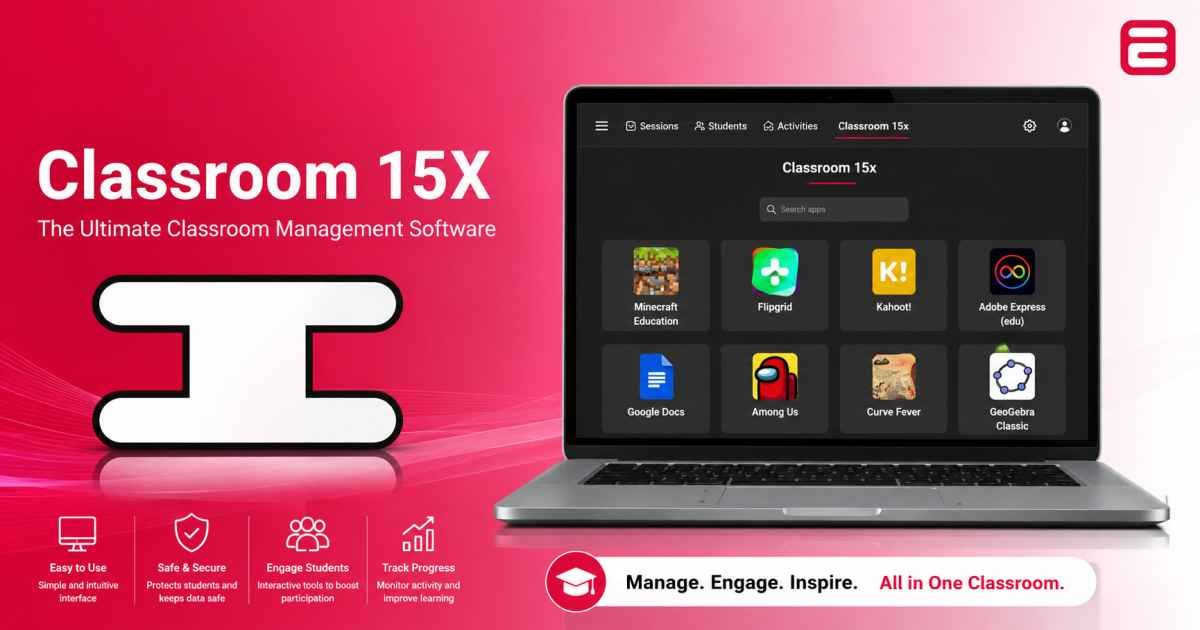
The demand for browser-based educational platforms and unblocked gaming websites has grown significantly in recent years. One name that continues to attract attention in 2026 is Classroom 15x. Students frequently search for it to access browser games, educational resources, and entertainment that can be enjoyed directly from a web browser without requiring software downloads.
While Classroom 15x is primarily known as an online browser gaming portal, it also represents the growing trend of combining learning, problem-solving, creativity, and interactive entertainment in one accessible platform. Whether you’re a student, teacher, or parent, understanding how Classroom 15x works can help you use it safely and responsibly.
This complete 2026 guide explains Classroom 15x, its features, benefits, popular games, safety considerations, and best practices for balanced use.
What Is Classroom 15x?
Classroom 15x is an online browser-based gaming platform that offers a large collection of games that can often be played directly without downloads or installations. Many users refer to it as an unblocked games website, meaning the games are designed to work in standard web browsers and may remain accessible in environments where some gaming sites are restricted.
The platform typically includes games across multiple genres, such as:
- Puzzle games
- Strategy games
- Adventure games
- Sports games
- Arcade classics
- Racing games
- Action games
- Multiplayer experiences
- Educational games
Because the games run in modern browsers, users generally do not need high-end computers or specialized gaming hardware.
Why Classroom 15x Is Popular in 2026
Several factors explain why Classroom 15x has become increasingly popular among students and casual gamers.
Instant Browser Access
Users can launch games directly from their browser without downloading applications or creating complex installations.
Wide Variety of Games
Instead of focusing on one category, Classroom 15x offers games suitable for different interests and age groups.
Simple User Experience
Most games load quickly and feature intuitive controls, making them accessible even for younger players.
Free Entertainment
Many browser games available through Classroom 15x are free to play, making the platform attractive to students and casual users.
Key Features of Classroom 15x
Classroom 15x provides several features that contribute to its popularity.
Large Game Library
The platform typically includes hundreds of browser-based games covering numerous genres and skill levels.
No Software Installation
Because games run directly inside supported web browsers, users avoid lengthy downloads and software updates.
Cross-Platform Compatibility
Classroom 15x generally works across:
- Windows PCs
- Mac computers
- Chromebooks
- Linux systems
- Android devices
- iPhones and iPads
Quick Loading
Modern browser technologies allow many games to launch within seconds on stable internet connections.
Easy Navigation
Games are commonly organized into categories, making it simple to discover new titles based on interests.
Educational Value of Classroom 15x
Although Classroom 15x is primarily associated with entertainment, many browser games also encourage valuable cognitive skills.
Problem-Solving
Puzzle and strategy games challenge players to analyze situations, develop solutions, and think critically.
Logical Thinking
Many games reward careful planning rather than random actions, helping users improve logical reasoning.
Hand-Eye Coordination
Fast-paced games can improve reaction time and coordination through repeated practice.
Creativity
Sandbox and building games encourage imagination, experimentation, and creative design.
Decision-Making Skills
Strategy games often require players to evaluate multiple options before making decisions, reinforcing planning and resource management.
Popular Types of Games Found on Classroom 15x
Although the available game selection may change over time, Classroom 15x commonly features several popular categories.
Puzzle Games
These games focus on:
- Pattern recognition
- Memory
- Logic
- Spatial reasoning
- Mathematical thinking
Strategy Games
Players manage resources, solve challenges, and make tactical decisions to achieve objectives.
Adventure Games
Exploration-based games combine storytelling, puzzles, and character progression.
Sports and Racing Games
These titles simulate competitive sports and driving experiences while emphasizing timing and precision.
Arcade Games
Classic arcade-inspired games remain popular because of their simple controls and fast gameplay.
Is Classroom 15x Safe to Use?
Like any online platform, Classroom 15x should be used responsibly.
Use Official Websites
Always verify that you are visiting the legitimate Classroom 15x website rather than imitation domains.
Avoid Unnecessary Downloads
Legitimate browser games generally do not require additional software installations.
Protect Personal Information
Do not share:
- Passwords
- Email credentials
- Financial information
- Personal identification
unless you have verified the website’s authenticity.
Watch for Advertisements
Some free gaming websites display advertisements. Users should avoid clicking suspicious pop-ups or misleading download buttons.
Follow School Policies
Students should respect school technology policies and use educational resources appropriately during instructional time.
Best Practices for Responsible Gaming
Browser games can be enjoyable and educational when used in moderation.
Balance Gaming and Learning
Complete school assignments before spending extended periods playing games.
Take Regular Breaks
Short breaks help reduce eye strain and maintain healthy screen habits.
Use Secure Devices
Keep browsers, operating systems, and antivirus software updated for better protection.
Play Age-Appropriate Games
Parents and educators should encourage games suitable for the player’s age and maturity level.
Monitor Screen Time
Setting reasonable daily limits helps maintain a healthy balance between entertainment, education, and other activities.
Frequently Asked Questions About Classroom 15x
What is Classroom 15x?
Classroom 15x is a browser-based gaming platform known for offering a wide variety of online games that can often be played without downloading software.
Is Classroom 15x free?
Many of the games available on Classroom 15x are free to access through a supported web browser.
Can Classroom 15x be used on Chromebooks?
Yes. Because the platform is browser-based, it generally works well on Chromebooks as well as Windows, macOS, Linux, and mobile devices.
Do I need to install anything?
Most games run directly in the browser, so additional software installation is typically unnecessary.
Is Classroom 15x educational?
While many games are designed primarily for entertainment, puzzle, strategy, simulation, and logic games can help develop problem-solving, critical thinking, and decision-making skills.
Final Thoughts
Classroom 15x has become a popular destination for browser-based gaming in 2026, offering a diverse collection of puzzle, strategy, adventure, sports, racing, and arcade games that are easily accessible from modern web browsers. Its ease of use, broad device compatibility, and extensive game library make it appealing to students and casual gamers alike.
Although Classroom 15x is best known for entertainment, many of its games can also support the development of critical thinking, logic, creativity, and problem-solving skills when used responsibly. By accessing the platform through official sources, avoiding suspicious downloads, protecting personal information, and maintaining a healthy balance between gaming and academic responsibilities, users can enjoy a safe and engaging online experience throughout 2026.

Apple in ASL: How to Sign “Apple” in American Sign Language

Wood Duck Call: A Complete Guide to Choosing, Using, and Understanding Wood Duck Calls

Ronaldo Bicycle Kick: The Legendary Goal That Made Football History

EO PIS: Complete Guide to the Electronic Office Personnel Information System in 2026

Mark Hines: The Multifaceted Journey of a Scientist, Athlete, and Thought Leader

Nerwey: Unlocking the Power of a Unique Digital Identity for Branding and SEO Success
 Tech2 months ago
EO PIS: Complete Guide to the Electronic Office Personnel Information System in 2026
- Sports2 months ago
Mark Hines: The Multifaceted Journey of a Scientist, Athlete, and Thought Leader
- Uncategorized2 months ago
Nerwey: Unlocking the Power of a Unique Digital Identity for Branding and SEO Success
- Lifestyle2 months ago
Mercedes Spall: The Untold Story of Timothy Spall’s Daughter Who Chose Privacy Over Fame
- Fashion2 months ago
Jo Wilder: Exploring the Name, Authors, and Educational Impact
- Fashion2 months ago
Deanna Che: The Enigmatic Landscape Architect and the Quiet Force Behind a Star’s Multicultural Roots
- Tech2 months ago
The Definitive Article on xgrace19x
- Movie2 months ago
Otelia Cox: The Quiet Strength Behind Hollywood’s Tony Cox